
 Service

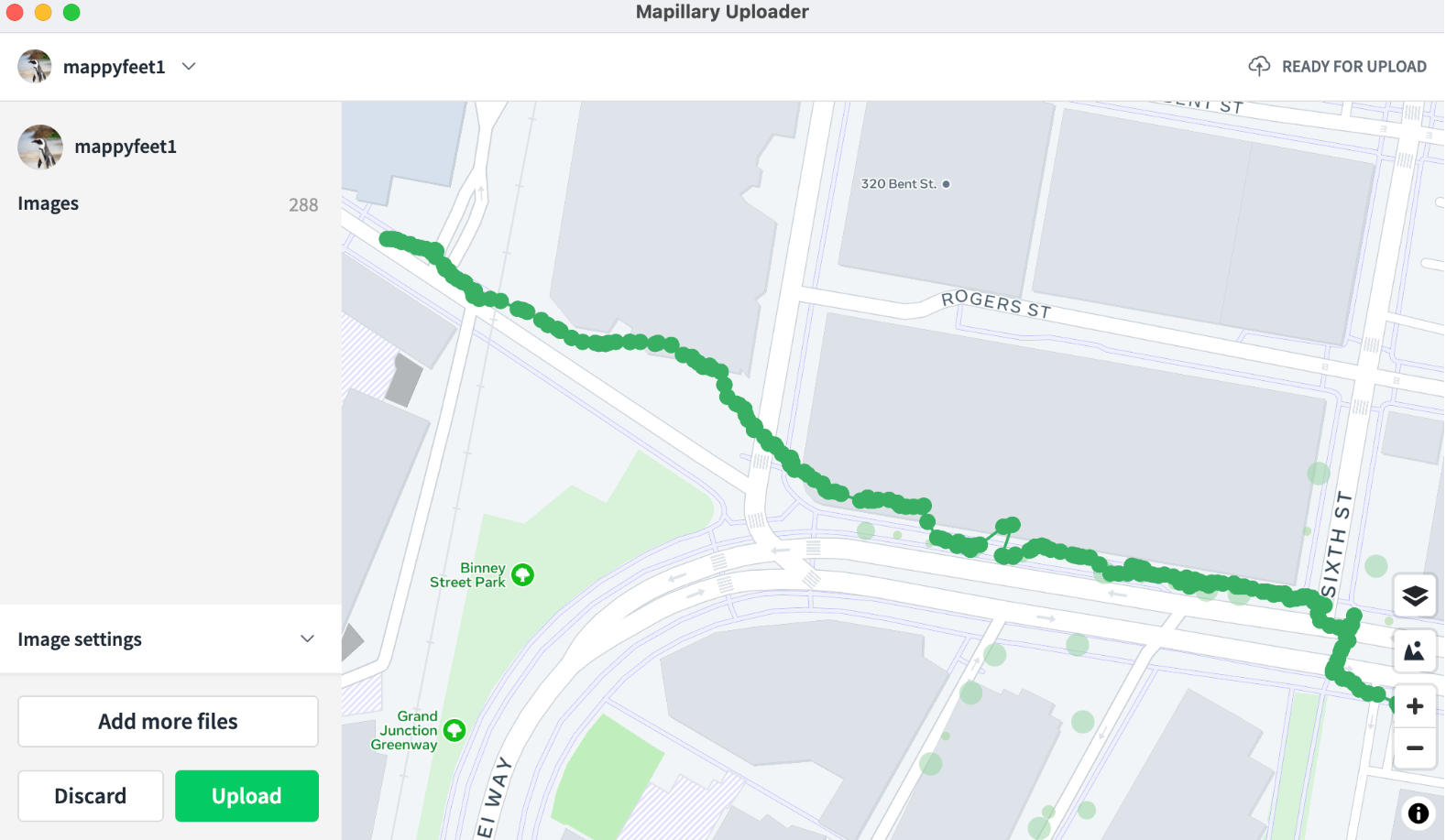
Mapillary Map Traces / GPX Service
The Mapillary Map Traces / GPX service is an interface for providing trajectory data accompanying street-level imagery collection, offered by Mapillary. It enables the publication and retrieval of movement paths (traces) corresponding to street-level images captured and uploaded by users as geospatial data. Primarily delivered in standard formats such as GPX, it provides user movement trajectories—from walking, cycling, or driving—as time‑series coordinate data, allowing spatially‑linked analysis and visualization alongside street‑level imagery. These trace data are highly compatible with open‑map ecosystems like OpenStreetMap (OSM) and serve as an important supplementary data source for real‑world road and route information.
2026-01-23 13:33:37
PLY (Polygon File Format / Stanford Triangle Format)
LY (Polygon File Format / Stanford Triangle Format) is a file format for three-dimensional data primarily used in 3D scanning and computer graphics. Originally developed at Stanford University, it is characterized by its ability to flexibly describe not only shape information such as point clouds and polygon meshes but also attributes like color, normal vectors, and transparency. With a simple yet highly extensible structure, PLY is widely utilized across research and industrial applications, playing a key role in areas such as 3D modeling, visualization, reverse engineering, and digital preservation of cultural heritage.
2026-01-23 13:25:36
XYZ Format
The XYZ format is one of the most fundamental and widely used point data formats for describing three‑dimensional positional information using X, Y, Z coordinate values. It is typically stored as a text (ASCII) file, with each line representing a single point containing planar coordinates (X, Y) and a height or depth value (Z). Thanks to its simple structure, the XYZ format is utilized across a broad range of fields, including topographic surveying, point‑cloud processing, 3D modeling, GIS, CAD, and remote sensing.
2026-01-22 18:54:59
DEM (Digital Elevation Model Format)
DEM (Digital Elevation Model) is a universal terrain data format and concept that represents ground surface elevation in a grid-based (raster) numerical form. Each grid cell stores a corresponding elevation value, enabling quantitative analysis of terrain undulation and shape. As a vendor-neutral general-purpose format, DEM is widely used and regarded as a fundamental and essential spatial dataset across various fields, including terrain analysis, cartography, simulation, disaster prevention, and environmental analysis.
2026-01-22 18:48:32
TER (Terragen Terrain File)
TER (Terragen Terrain File) is a proprietary terrain data file format used by the natural terrain generation software Terragen. Primarily designed for storing elevation information (heightmaps), it aims to represent realistic landforms such as mountains, hills, and valleys with high precision. While the TER format has been widely used in terrain modeling and the CG/VFX fields for its emphasis on visual realism, it is often treated as a supplementary or conversion format in the GIS domain.
2026-01-22 16:39:40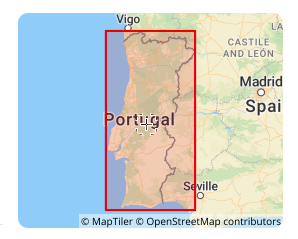
Lisbon 1890 (EPSG:4803)
Lisbon 1890 (EPSG:4803) is a regional non-geocentric datum established by Portugal at the end of the 19th century. It primarily provided a unified coordinate framework for the country's early terrestrial surveying and topographic mapping (for example, when combined with the Bonne projection to form EPSG:2963). As a national standard from a specific historical period, it has been completely superseded by modern geocentric datums (e.g., ETRS89). Its current value is limited solely to processing and converting legacy Portuguese data such as historical maps and cadastral archives from the late 19th to mid-20th century, which, after professional conversion, can be used for digital archiving and historical geographic analysis.
2025-12-29 16:45:37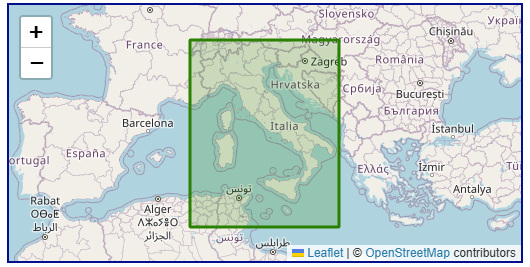
Roma40 (Rome 1940, EPSG:4806)
Roma40 (Rome 1940, EPSG:4806) is a regional, historical geodetic datum designed specifically for Italy and its surrounding regions (such as Sicily and Sardinia), and belongs to the geocentric coordinate system. Its core purpose was to provide a benchmark for official Italian surveying from the 1940s to the 1990s.
2025-12-29 16:38:56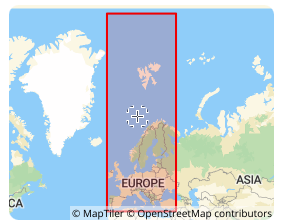
ED87 (European Datum 1987, EPSG:4231)
ED87 (European Datum 1987, EPSG:4231) is a regional geodetic datum established in 1987 specifically for Europe, primarily Western Europe. It is a traditional geodetic datum designed to align the coordinate framework as closely as possible with the European geoid at the time and served as a key intermediate achievement in the modernization of European geodesy. Its primary application is in processing historical surveying data, topographic maps, and engineering drawings from Western Europe predating the 1990s. However, as a transitional datum based on terrestrial triangulation, its accuracy and global compatibility are now insufficient. Today, it is mainly used for scenarios such as historical data integration, digital archiving, and specialized research after being transformed into modern geocentric coordinate systems like WGS84 or ETRS89.
2025-12-29 16:30:44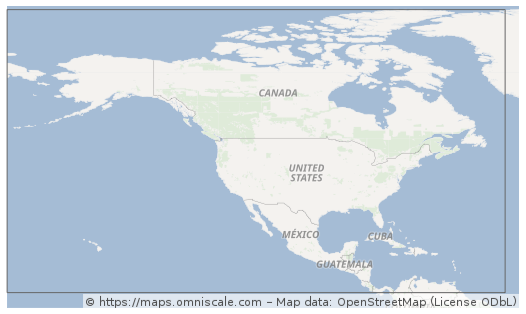
NAD27 (North American Datum 1927)
NAD27 (North American Datum 1927) is a geodetic datum established in 1927 for North America, defined based on the Clarke 1866 ellipsoid with its origin at Meades Ranch in Kansas, USA. This datum served as the official mapping and surveying standard for the United States, Canada, and Mexico for decades, widely used in historical topographic maps, land ownership records, and traditional geographic data. Although its accuracy is limited by early surveying technology and it has been superseded by more modern datums (e.g., NAD83), a significant number of historical archives and legacy systems still rely on NAD27. Therefore, special attention must be paid to datum transformations when dealing with older geographic data in North America.
2025-12-29 16:04:49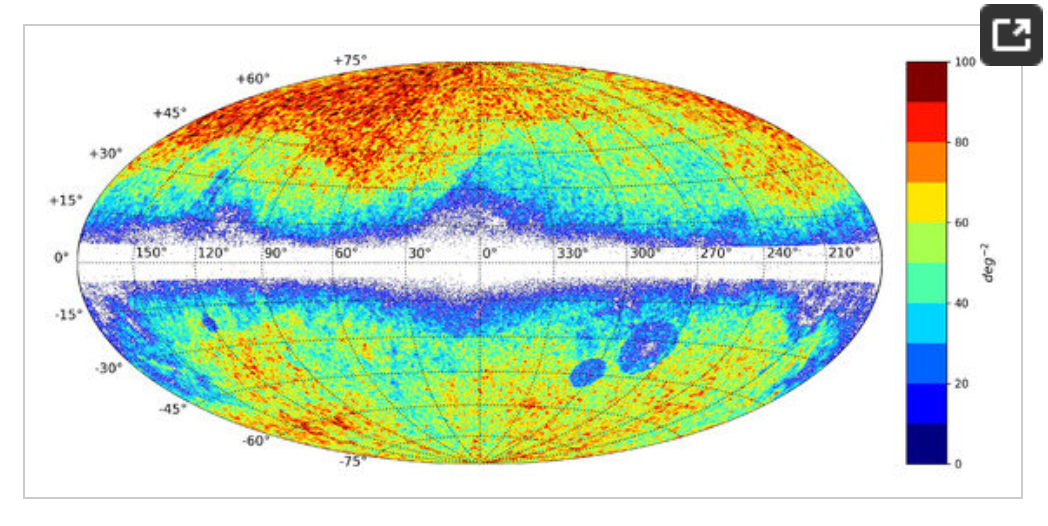
Gaia-CRF3 (Gaia Celestial Reference Frame 3)
Gaia-CRF3 (Gaia Celestial Reference Frame 3) is the latest generation of celestial reference frame constructed by the European Space Agency's (ESA) Gaia satellite mission. It primarily uses ultra-distant celestial objects such as distant galaxies and quasars as reference points, providing a highly accurate spatial coordinate reference in space that is unaffected by Earth's motion or rotation. Gaia-CRF3 serves as a foundation for position determination in astronomy and space geodesy, complementing and enhancing the previous ICRF (International Celestial Reference Frame).
2025-12-29 15:08:37