
 Service

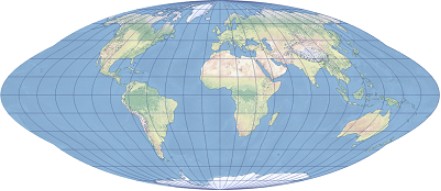
Goode Homolosine Projection
Goode Homolosine Projection, also known as the Goode Equal Area Projection, is an interrupted pseudo-cylindrical equal-area projection developed by John Paul Goode in 1925. It combines the Mollweide projection for regions outside 40°44′ north and south latitude with the sinusoidal projection for the equatorial region in between, reducing distortion over global landmasses or oceans as much as possible by interrupting portions of the meridians. It strictly maintains proportional area equivalence between the map and the ground. It is often used for small-scale thematic world maps that require precise area comparisons, but it cannot simultaneously preserve the continuity of both land and ocean and is not suitable for navigation purposes.
2026-08-27 19:58:22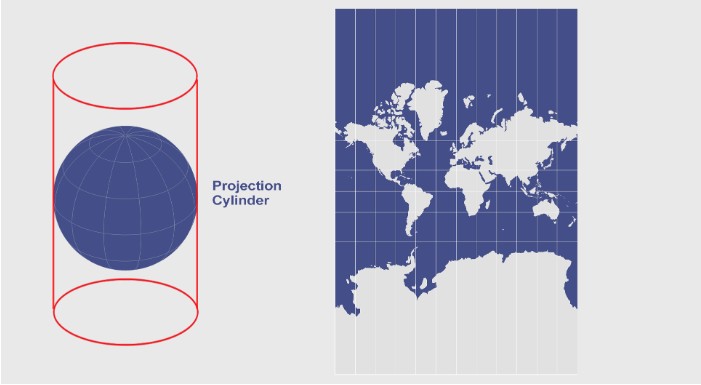
Mercator Equal Area Projection
Mercator Equal Area Projection, also known as the Cylindrical Equal Area Mercator Projection, is a normal-aspect equal-area cylindrical projection developed from the conventional conformal Mercator projection. It adjusts the latitudinal coordinate calculation formula so that the area ratio of any region on the map exactly matches that of the corresponding region on the Earth, completely eliminating the excessive area exaggeration at high latitudes found in the traditional Mercator projection. However, it also abandons the conformal property of the traditional Mercator, resulting in noticeable local angle, shape, and direction distortion, and it can no longer display rhumb lines as straight lines. Therefore, it is no longer suitable for marine navigation applications and is instead more often used in thematic cartography that requires accurate statistical representation of global area proportions.
2026-08-27 19:54:09
Cylindrical Equal Area Projection
Cylindrical Equal Area Projection, also commonly known as the Lambert Cylindrical Equal Area Projection, is a type of cylindrical projection that preserves area. It was proposed in 1772 by the Swiss mathematician Johann H. Lambert. This projection maps the Earth's meridians and parallels onto a cylindrical surface, which is then unrolled into a plane. Meridians appear as equally spaced, parallel vertical lines, while parallels are horizontal straight lines perpendicular to the meridians. The spacing between parallels decreases toward the poles, and the poles are projected as straight lines with the same length as the Equator. This projection strictly ensures that relative areas on the map are consistent with those on the ground, but shape and angle distortion increase significantly with latitude. It is more suitable for large-scale mapping near the Equator and is often used in scenarios requiring precise area comparisons, such as climate maps and population distribution maps.
2026-08-27 19:48:49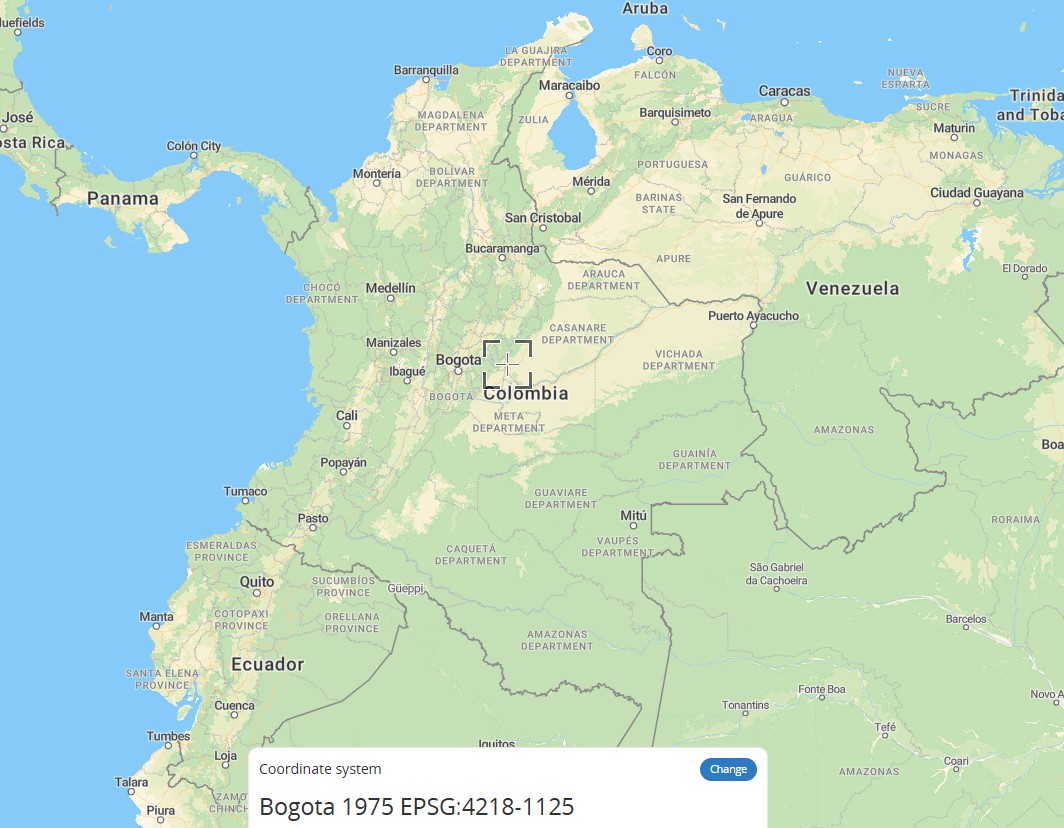
Bogota 1975 (EPSG:4218)
Bogota 1975 (EPSG:4218) is a national geodetic datum formerly used in Colombia. It employs the International 1924 ellipsoid and uses the meridian passing through the Bogotá Observatory as its prime meridian. It was primarily used for surveying and geolocation within mainland Colombia. It replaced three earlier adjustment versions from 1941, 1944, and 1951, and has since been superseded by the more modern MAGNA-SIRGAS datum (EPSG:4685).
2026-08-27 19:42:45
Campo Inchauspe (EPSG:4221)
Campo Inchauspe (EPSG:4221) is Argentina's national geodetic datum established in the mid-20th century. It uses the International Hayford ellipsoid (semi-major axis: 6,378,388 meters, flattening: 1:297.0) as its reference ellipsoid, with its origin at the Campo Inchauspe point near the La Plata Astronomical Observatory in Argentina. It served for a long time as the official coordinate system for Argentina's national surveying and mapping. With the development of global satellite positioning technology, Argentina gradually transitioned to modern coordinate reference frameworks such as POSGAR, which are more compatible with WGS 84. However, Campo Inchauspe remains an important reference for historical maps and legacy data as a historical datum.
2026-08-27 19:37:22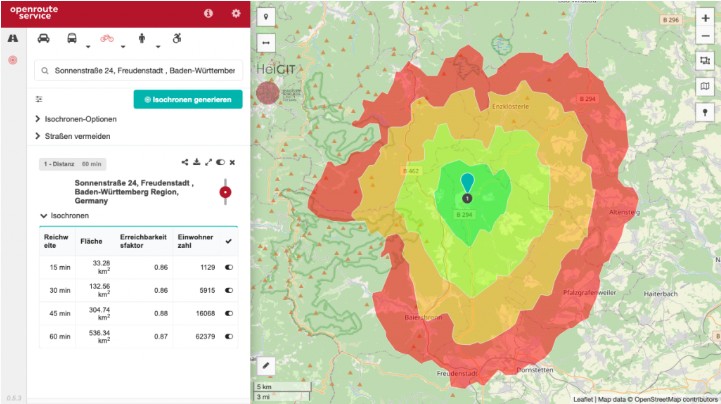
ORS API (OpenRouteService)
ORS API (OpenRouteService) is an open-source geospatial routing service based on OpenStreetMap data. It provides RESTful interfaces and supports route planning for multiple travel modes including driving, walking, and cycling, as well as isochrone analysis, distance matrix calculation, geocoding, elevation queries, track matching, and multi-point route optimization. It is developed in Java, follows the GPLv3 open-source license, and can be deployed independently via Docker or accessed directly through its public API. It is widely used in scenarios such as navigation applications, logistics and delivery, urban planning, and outdoor sports.
2026-08-27 19:29:40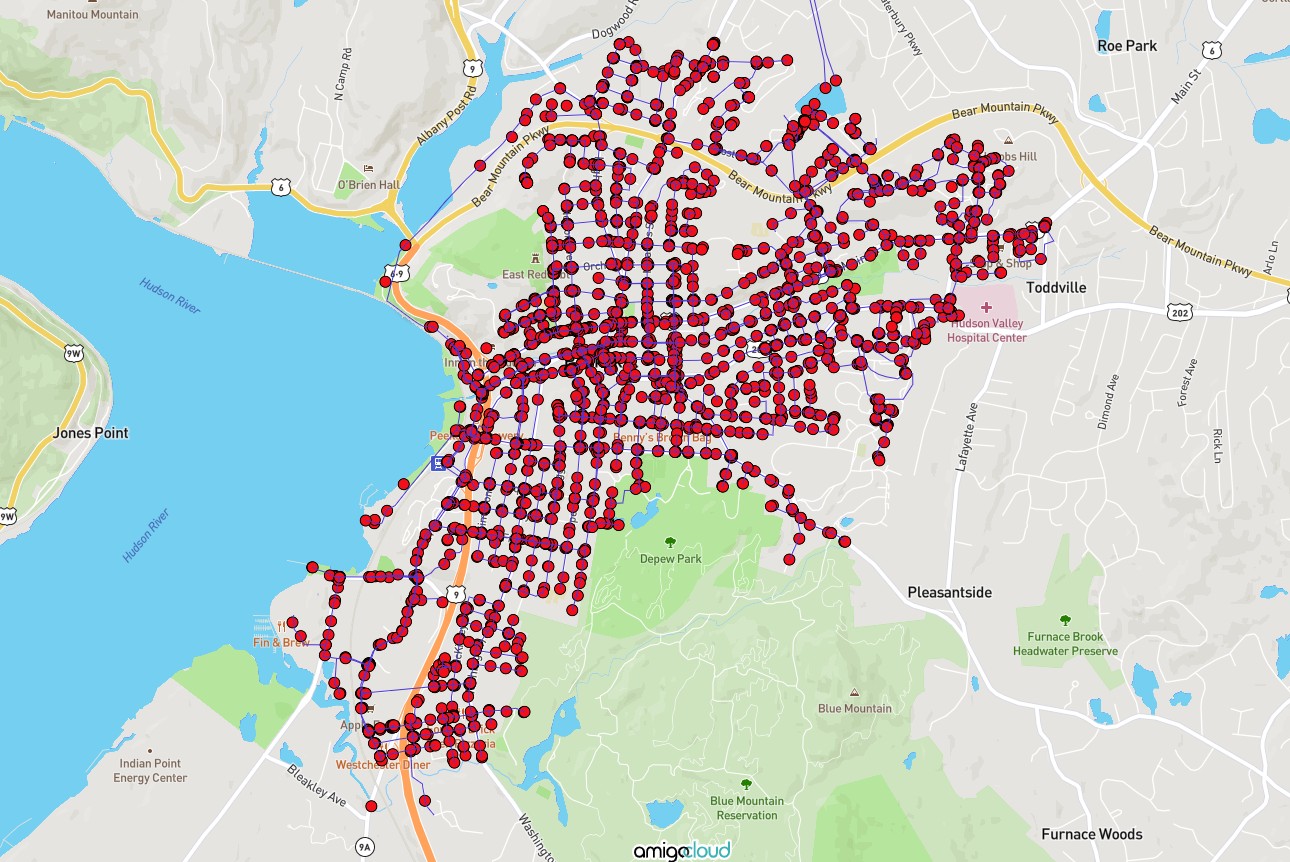
AmigoCloud API
AmigoCloud API is an open interface for cloud-based geospatial data services. After authenticating with a dedicated API key, users can perform operations such as reading, writing, querying, and managing cloud GIS datasets. It is compatible with the GDAL/OGR driver, supports multiple spatial data formats including vector and raster, and provides a Python SDK for easy developer integration. It is suitable for scenarios such as offline mobile data collection and multi-device data synchronization.
2026-08-27 19:20:30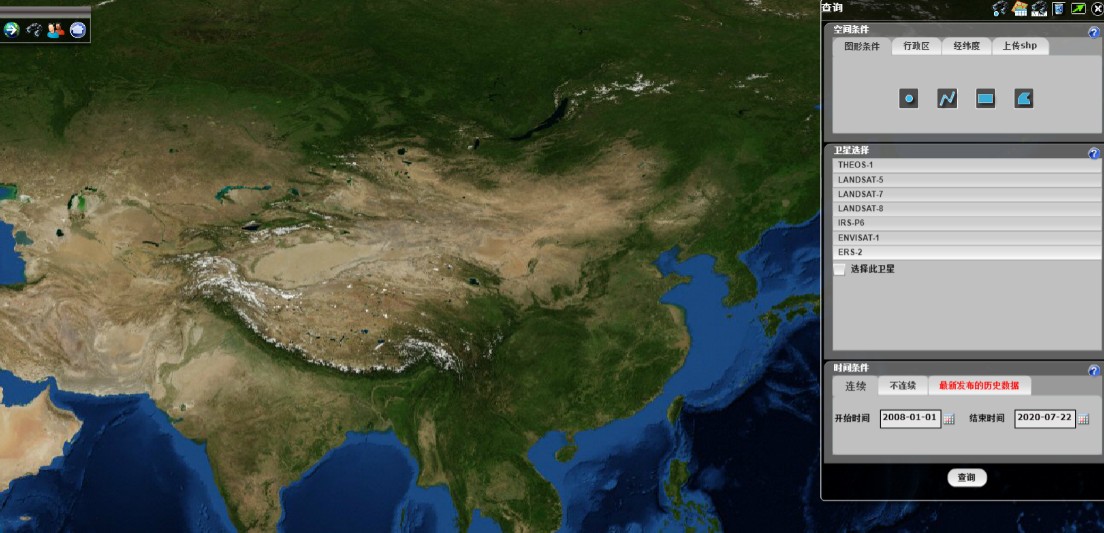
ERS / ERMapper Raster
ERMapper Raster (abbreviated as ERS) is a proprietary raster data format of the ER Mapper remote sensing software under Hexagon Geospatial. It consists of a text-format .ers header file (storing image attributes, metadata, and georeferencing information) and a raw image data file with no extension. It supports multi-band storage, can carry various raster data types such as photographic imagery and terrain elevation, automatically includes coordinate system information, and accommodates multiple numeric data types including 8-bit, 16-bit, and 32-bit. It is widely used in GIS-related fields such as remote sensing and surveying.
2026-08-27 19:09:09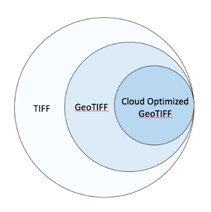
COG (Cloud Optimized GeoTIFF)
COG (Cloud Optimized GeoTIFF) is an official OGC standard officially released in July 2023. It is optimized based on the traditional GeoTIFF format. Through a special file organization method featuring built-in tiles and multi-scale overviews, it enables clients to use HTTP range requests to on-demand retrieve the required local image content without downloading the entire large raster file. It is fully compatible with conventional GIS software while significantly improving the online streaming loading, visualization, and processing efficiency of geographic raster data such as remote sensing imagery and DEMs in cloud environments. It has now been widely adopted in geoscience data distribution scenarios by organizations such as NASA.
2026-08-27 18:57:43