
 Service


Tokyo UTM Zones
Tokyo UTM Zones are historic projected coordinate systems applying the UTM projection to the Tokyo datum (Bessel 1841 ellipsoid), serving as Japan's fundamental geodetic framework until 2002. While modern systems like JGD2000/JGD2011 UTM zones have superseded them, these zones remain essential for interpreting 20th-century Japanese geographic data.
2026-03-14 13:57:54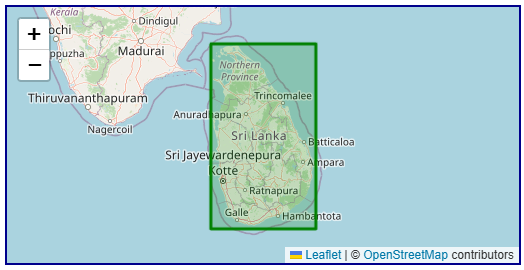
Sri Lanka Kandawala Grid
Sri Lanka Kandawala Grid is a historic projected coordinate system based on the Kandawala datum, established during the British colonial period to serve as the foundational mapping framework for the island nation. Developed in the early 20th century, this system employs a transverse Mercator projection to support cadastral surveying, topographic mapping, and engineering projects throughout Sri Lanka. While modern systems like SLD99 / Sri Lanka Grid 1999 (EPSG:5235) have been introduced for contemporary applications, the Kandawala Grid remains essential for interpreting the extensive archive of 20th-century geographic data across the country.
2026-03-13 15:53:52
Madagascar Laborde Grid
Madagascar Laborde Grid is a historic oblique Mercator projection system designed in 1926 by French engineer Jean Laborde specifically for Madagascar's unique geography. Based on the Tananarive datum, it remains the legally mandated projection for the island nation.
2026-03-12 18:49:01
South Africa Lo System
South Africa Lo System (Lo System, short for "Landmeter-generaal Lo-sone" or "Surveyor-General Lo zones") is a suite of projected coordinate systems established by the Office of the Surveyor-General of South Africa to serve as the foundational mapping framework for the country. Developed as a national standard, this system employs a transverse Mercator projection divided into multiple 2° longitude-wide belts to support cadastral surveying, engineering projects, and topographic mapping throughout South Africa. While modern implementations like Hartebeesthoek94 / Lo zones (EPSG:2050-2058) provide WGS84-compatible alternatives, the historical Cape / Lo zones (EPSG:22275-22293) remain essential for interpreting the extensive archive of 20th-century geographic data across South Africa .
2026-03-11 13:34:54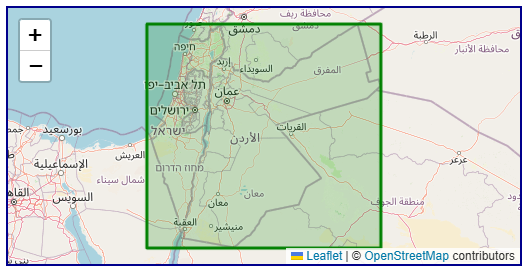
Palestine 1923 / Palestine Grid (EPSG:28191)
Palestine 1923 / Palestine Grid (EPSG:28191) is a historic projected coordinate system established by the British Military Survey in 1923 to serve as the foundational mapping framework for the region . Developed under the Palestine 1923 datum, this system was meticulously designed to support cadastral surveying, engineering projects, and topographic mapping throughout the British Mandate period . While modern systems like Israeli TM Grid (EPSG:2039) have largely superseded it for contemporary applications, the Palestine Grid remains essential for interpreting the vast archive of 20th-century geographic data across Israel, Jordan, and the Palestinian Territory .
2026-03-10 20:10:47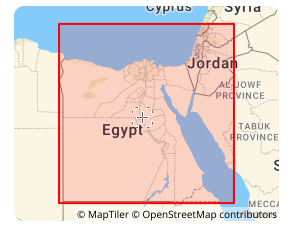
Egypt Red Belt Coordinate System (EPSG:22992)
Egypt Red Belt coordinate system is a national projected coordinate system established in Egypt during the 20th century, forming part of the Old Egyptian National Coordinate System of 1907, together with the Egypt Blue Belt and Egypt Purple Belt. Based on the Helmert 1906 ellipsoid and employing the Transverse Mercator projection, this system was primarily used for engineering surveys and topographic mapping in the Nile Delta and along the Red Sea coast. Although modern GNSS applications are increasingly prevalent, the Red Belt system remains irreplaceable for processing historical Egyptian land records, Suez Canal infrastructure archives, and 20th‑century national topographic map series.
2026-03-10 20:02:24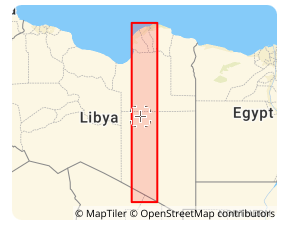
Libya Transverse Mercator coordinate system (EPSG:2062)
Libya Transverse Mercator coordinate system (EPSG:2062) is a projected coordinate reference system officially adopted by the State of Libya for national topographic mapping and cadastral surveying. Originally developed in the mid-20th century under Italian and later international geodetic influence, the system is based on the War Office ellipsoid and is historically tied to Libya’s national mapping infrastructure. While newer geocentric systems are increasingly used for GNSS applications, Libya TM remains critical for processing and maintaining historical geographic records, land administration documents, and foundational topographic series across the country.
2026-02-06 14:21:03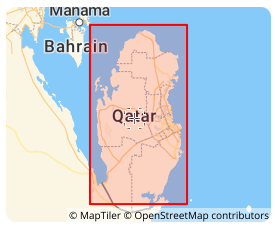
Qatar National Grid (Qatar National Grid 2009 | EPSG:28600)
Qatar National Grid (Qatar National Grid 2009 | EPSG:28600) is a projected coordinate system officially adopted by the State of Qatar for national surveying, mapping, and land administration. Established in 2009 through collaboration between Qatar’s Ministry of Municipality and Environment and international geodetic experts, this system provides a modern, GNSS-compatible framework optimized for Qatar’s compact territory and rapid urban development. It supports high-precision applications in construction, infrastructure, and cadastral management, serving as Qatar’s primary legal and technical coordinate reference.
2026-02-06 13:54:42
Saudi Aramco Lambert coordinate system (EPSG:2329)
Saudi Aramco Lambert coordinate system (EPSG:2329) is a regional projected coordinate system historically developed and utilized by the Saudi Arabian Oil Company (Saudi Aramco) for its internal exploration, mapping, and engineering operations. This proprietary system, based on a modified regional datum, was established to meet the company's specific needs for geodetic control and mapping across its expansive operating areas in eastern Saudi Arabia. While modern global systems are now prevalent, understanding this legacy system remains crucial for interpreting and integrating a vast archive of historical well data, seismic surveys, pipelines, and facility maps that form the foundation of Saudi Arabia's petroleum industry.
2026-02-06 14:16:25
Jordan TM (Jordan Transverse Mercator | EPSG:3144)
Jordan TM (Jordan Transverse Mercator | EPSG:3144) is a projected coordinate system officially adopted by the Hashemite Kingdom of Jordan for national mapping and surveying purposes. Developed under British technical influence during the mid-20th century, this system serves as Jordan's primary framework for topographic mapping, land administration, and infrastructure development. While modern GNSS-compatible systems are increasingly utilized, Jordan TM remains essential for interpreting historical geographic data and maintaining continuity in the country's geospatial records.
2026-01-23 15:03:48