
 Service


LocationIQ API
LocationIQ API is a cloud-based web API service for searching, converting, and visualizing geospatial data. It primarily provides functions such as geocoding (address → coordinate conversion), reverse geocoding (coordinate → address conversion), map tile delivery, routing, and location search. Built on OpenStreetMap (OSM) data, it is characterized by its ability to build high-precision, low-cost location-based services. With its lightweight and simple REST API design, it integrates easily into web and mobile applications, making it suitable for developing a variety of location-based services.
2026-03-31 10:50:12
Geoapify Maps & Location API
Geoapify Maps & Location API is a cloud-based geolocation service that provides functionalities such as map display, geocoding, routing, and place search. Built on OpenStreetMap data, it is designed to enable developers to easily integrate mapping features into web and mobile applications. With its flexible API design and simple authentication method, it supports the development of a wide range of location-based applications and is used as a scalable platform suitable for commercial use.
2026-03-26 18:49:35
Stadia Maps API
Stadia Maps API is a cloud-based map service API for delivering map tiles and geospatial data. By using this API, developers can easily integrate high-quality map display functionality into websites and mobile applications. Stadia Maps is characterized by its ability to deliver both vector and raster tiles, providing fast distribution of map styles based on open data such as OpenStreetMap. It is also compatible with common map libraries, enabling flexible customization and high-performance map rendering. With its lightweight and scalable cloud infrastructure, it plays an important role in the development of geospatial applications.
2026-03-26 18:39:58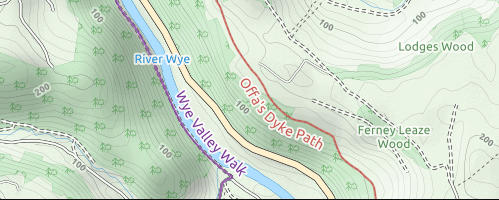
Thunderforest Maps API
Thunderforest Maps API is a collective term for the map delivery services provided by Thunderforest, offering an API that allows for the rapid integration of high-quality maps into web and mobile applications. It is accessed using an API key and provides multiple services, including standard map style delivery, raster tiles, static maps, vector styles, and vector sources. It features map styles such as OpenCycleMap, Transport, Landscape, Outdoors, and Atlas, and is easy to integrate with existing map libraries.
2026-03-26 18:44:46
OpenMapTiles Server
OpenMapTiles Server is open-source map server software for delivering vector map tiles. Developed by the OpenMapTiles project, it enables high-speed distribution of vector tiles (in Mapbox Vector Tile format) generated from geospatial data such as OpenStreetMap (OSM). It can be easily deployed in local server or cloud environments, and by combining it with web mapping libraries such as MapLibre GL, Mapbox GL JS, and Leaflet, high-performance interactive mapping applications can be built. OpenMapTiles Server is equipped with features such as tile caching, style management, and API delivery, and is widely used as a foundation for operating custom map services.
2026-03-24 19:12:00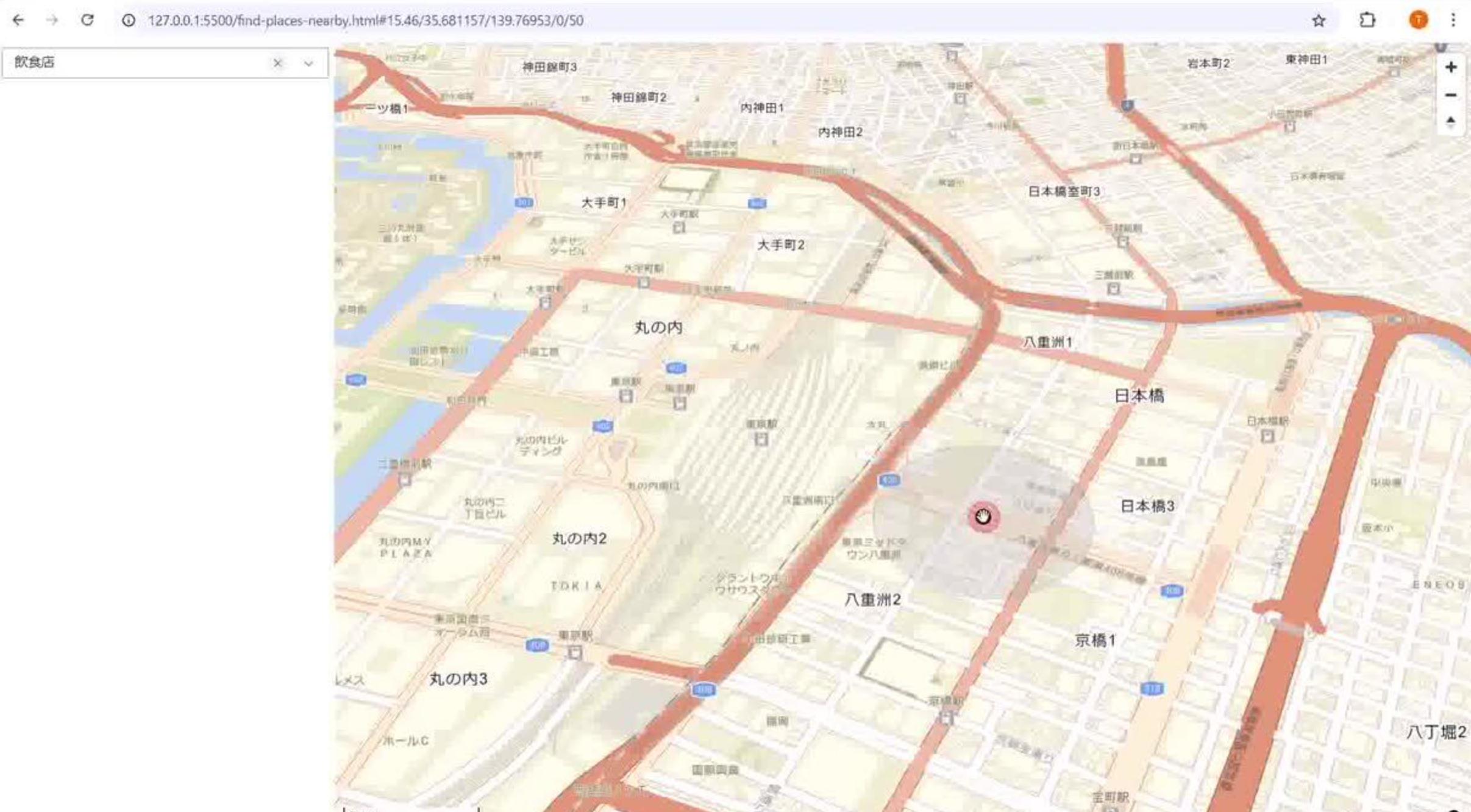
MapLibre Services
MapLibre Services (MapLibre GL + self-hosted service ecosystem) is a geospatial service platform built around MapLibre GL, an open-source map rendering library. Originally derived from the open-source version of Mapbox GL JS, this project enables high-speed vector map rendering, custom style display, and the development of interactive mapping applications. MapLibre Services is characterized by its ability to operate functions such as tile delivery, style management, geocoding, and routing on self-managed servers, allowing for flexible map service construction while avoiding cloud dependency. This enables enterprises and research institutions to securely manage their own geospatial data while developing advanced web mapping applications.
2026-03-24 19:02:15
SuperMap iServer REST API
SuperMap iServer REST API is a comprehensive, resource-oriented application programming interface that exposes the full spectrum of GIS functionalities through standard HTTP protocols. Built upon the Representational State Transfer (REST) architectural style, this API encapsulates core GIS capabilities—including map services, data management, spatial analysis, 3D visualization, and distributed processing—as addressable resources uniquely identified by URIs. By adhering strictly to REST principles, SuperMap iServer transforms complex GIS operations into simple, lightweight HTTP interactions that support multiple representation formats (JSON, XML, HTML, binary images) and standard HTTP methods (GET, POST, PUT, DELETE). This design enables developers, system integrators, and GIS professionals to build web and mobile applications that seamlessly integrate with enterprise geospatial infrastructure, whether for dynamic map visualization, real-time spatial querying, or large-scale distributed spatial analytics .
2026-02-25 14:39:27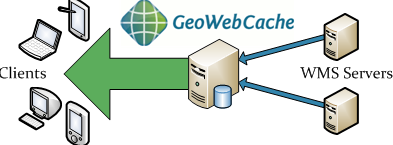
GeoWebCache
GeoWebCache is a high-performance, tile-caching server designed specifically for accelerating the delivery of geospatial map data over the web. It functions as a critical middleware component that sits between a map server (such as GeoServer, MapServer, or ArcGIS Server) and a map client (like OpenLayers, Leaflet, or MapLibre). By generating, storing, and serving pre-rendered map image tiles in standard web formats (PNG, JPEG, vector tiles), it dramatically reduces server load and improves response times for end users. Unlike rendering maps dynamically for each request, GeoWebCache serves pre-computed tiles, making it an essential tool for building scalable, fast, and responsive web mapping applications that serve large volumes of concurrent users.
2026-02-11 14:18:10
TileJSON
TileJSON is an open standard for describing map tile layers and their capabilities in a machine-readable JSON format. Originally developed by Mapbox as a specification for their mapping platforms, it has since evolved into a widely adopted community standard for declaring metadata about tile sets—whether they are raster tiles, vector tiles, or terrain tiles. A TileJSON file provides a structured, human-readable, and developer-friendly way to communicate essential information such as the tile server's endpoint URL, the tile format (PNG, MVT, GeoTIFF, etc.), the spatial extent (bounds), the coordinate reference system (commonly Web Mercator - EPSG:3857), the minimum and maximum zoom levels, attribution requirements, and other descriptive metadata. This standard enables map clients, styling tools, and data catalogues to automatically discover and consume tile services without requiring manual configuration or prior knowledge of the tile source's internal structure.
2026-02-25 14:29:21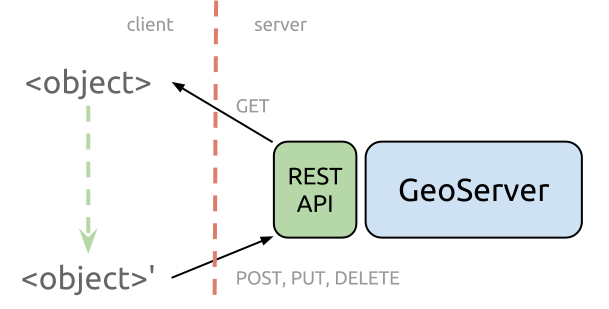
GeoServer REST API
GeoServer REST API is a comprehensive programmatic interface for configuring and managing the GeoServer open-source geospatial data server. As an integral component of the GeoServer software suite, the API provides a standardized HTTP-based mechanism to automate and control virtually all administrative and data publishing tasks within a GeoServer instance. It enables developers, system administrators, and GIS professionals to interact with GeoServer programmatically—creating workspaces, adding data stores, publishing layers, configuring styles (SLD), managing security, and adjusting service settings (WMS, WFS, WCS) without using the web administration interface. This API is essential for integrating GeoServer into automated DevOps pipelines, multi-instance deployments, and custom geospatial application backends.
2026-02-11 14:01:51