
 Service

SOSI (Systematic Organization of Spatial Information)
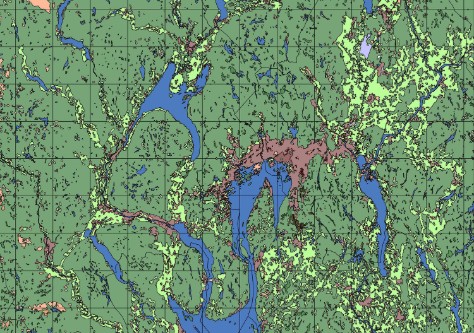
SOSI (Systematic Organization of Spatial Information) is Norway‘s national geographic information exchange standard. It is widely used for geospatial data sharing and exchange among Norwegian government agencies and industries. SOSI supports the structured storage of various types of spatial information, including terrain, roads, water systems, and more. It serves as an important foundational format in Norway’s GIS domain and is still in use by official mapping authorities, although there are plans to transition to international standards such as GML in the future.
2026-05-25 13:36:42
SpatiaLite (.sqlite)
SpatiaLite (.sqlite) is an extension module for the SQLite database that adds support for geospatial data to SQLite. It enables the storage, querying, and analysis of geometric objects such as points, lines, and polygons, and provides full spatial indexing and spatial functions (e.g., distance calculation, intersection testing, buffer analysis). Thus, it implements lightweight, serverless spatial database functionality within a single .sqlite file, making it suitable for geographic information processing needs in mobile applications, desktop tools, and embedded systems.
2026-05-25 13:29:10
WKB (Well-Known Binary)
WKB (Well-Known Binary) is a binary encoding standard defined by the Open Geospatial Consortium (OGC) for representing geometric objects. It stores spatial features such as points, lines, and polygons as a compact byte stream. Compared to the text‑based WKT format, WKB offers higher storage efficiency and faster transmission and parsing speeds. Its structure typically consists of a 1‑byte byte order marker (0x01 for little‑endian), a 4‑byte geometry type code (e.g., Point = 1, LineString = 2), followed by coordinate data. Coordinates are arranged as IEEE 754 double‑precision floating‑point numbers. WKB is widely used as the underlying storage format for geometry fields in spatial databases such as PostGIS and MySQL.
2026-05-25 13:24:10
WKT (Well-Known Text)
WKT (Well-Known Text) is a standardized text format used to represent geometric objects—such as points, lines, and polygons—in a human‑readable string form. It is widely applied in geographic information systems (GIS) and spatial databases. For example, POINT(30 10) represents a point with coordinates (30, 10); LINESTRING(0 0, 1 1, 2 1) represents a polyline; and POLYGON((0 0, 10 0, 10 10, 0 10, 0 0)) represents a rectangular polygon. Its syntax is defined by the Open Geospatial Consortium (OGC), facilitating the exchange of spatial data between different systems.
2026-05-25 13:11:33
TopoJSON (Topology JSON Format)
TopoJSON (Topology JSON Format) is a JSON-based vector data format designed to efficiently represent geospatial data. Proposed by American data visualization researcher Mike Bostock, it extends the standard GeoJSON format and is characterized by explicitly preserving the topology (adjacency relationships and shared boundaries) of geographic data. TopoJSON adopts a structure where boundary lines shared among multiple geographic objects are stored only once and then referenced, enabling significant data size reduction. Therefore, it is widely used in scenarios requiring lightweight, high-speed geographic data delivery, such as web maps and data visualization.
2026-04-28 14:14:36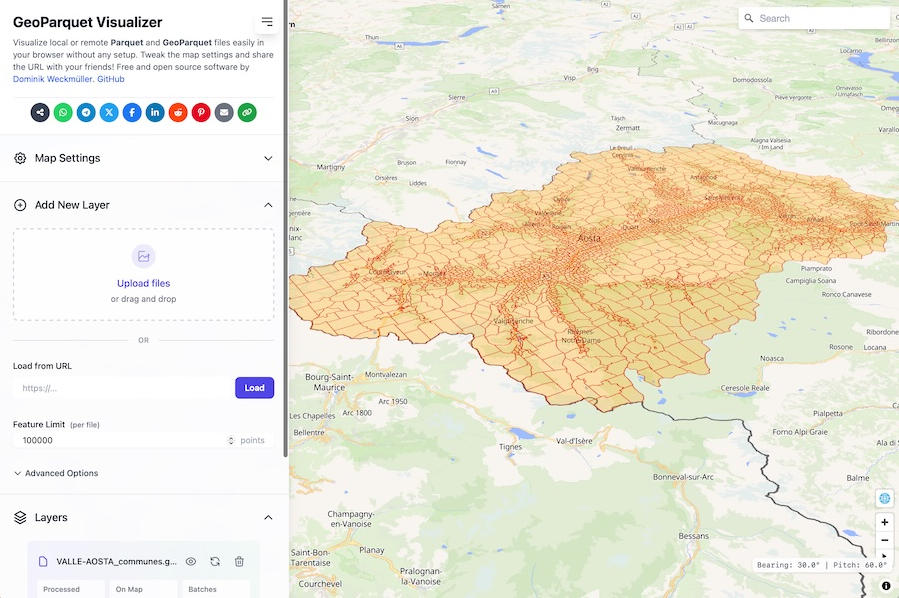
Parquet / GeoParquet
Parquet / GeoParquet is a cloud-native data format built on Apache Parquet, a columnar data format, extended to efficiently store and process geospatial data. GeoParquet adds metadata specifications for handling geospatial information and is designed to enable high-speed processing of large-scale spatial data in cloud environments and distributed processing platforms. It is primarily used in environments such as big data analytics, cloud GIS, and geospatial data lakes, and is recognized as a next-generation geospatial data format gaining attention within the Open Geospatial Consortium (OGC) community.
2026-04-28 14:00:33
Feather / GeoArrow
Feather / GeoArrow is a geospatial data format extended from Apache Arrow, a columnar data format designed for high-speed data processing. It is designed to efficiently store and transfer large volumes of vector geographic data, achieving faster read/write performance and memory efficiency than conventional GIS formats. It is gaining attention as a next-generation format for high-speed processing of geographic data, particularly in cloud environments and big data analytics platforms. GeoArrow utilizes Arrow's columnar memory structure and is characterized by its ability to manage geometry and attribute data in a unified manner.
2026-04-28 13:50:15
ENVI .HDR + .DAT
ENVI .HDR + .DAT is a raster data format widely used in ENVI, a remote sensing analysis software. It is primarily designed for storing multispectral images such as satellite imagery, aerial photographs, and hyperspectral data. This format consists of a combination of a .DAT file that stores the actual pixel data and a .HDR header file that stores metadata such as image size, number of bands, data type, and coordinate system. The ENVI format is simple in structure yet highly flexible, and is widely used in the fields of remote sensing and geospatial analysis. Additionally, due to its near-open specification, it can be read by many GIS and remote sensing software applications.
2026-04-28 13:46:13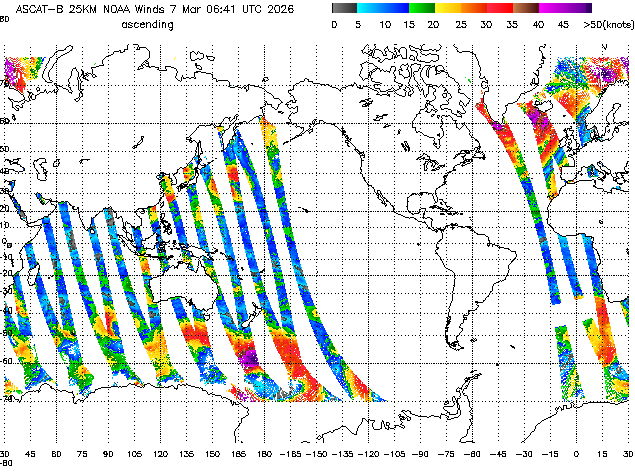
ASCAT (Advanced Scatterometer)
ASCAT (Advanced Scatterometer) is a active microwave radar instrument carried aboard the MetOp series of polar-orbiting satellites operated by EUMETSAT . As a real aperture radar scatterometer, ASCAT transmits C-band (5.255 GHz) microwave pulses and measures the backscatter from the Earth's surface to derive key geophysical parameters . The primary operational application is ocean surface wind vector retrieval, providing measurements of wind speed and direction over global oceans . Additionally, ASCAT data is used for soil moisture monitoring over land surfaces and sea ice detection . The instrument features two independent swaths of backscatter measurements, enabling wide spatial coverage and frequent revisit times.
2026-03-07 14:46:13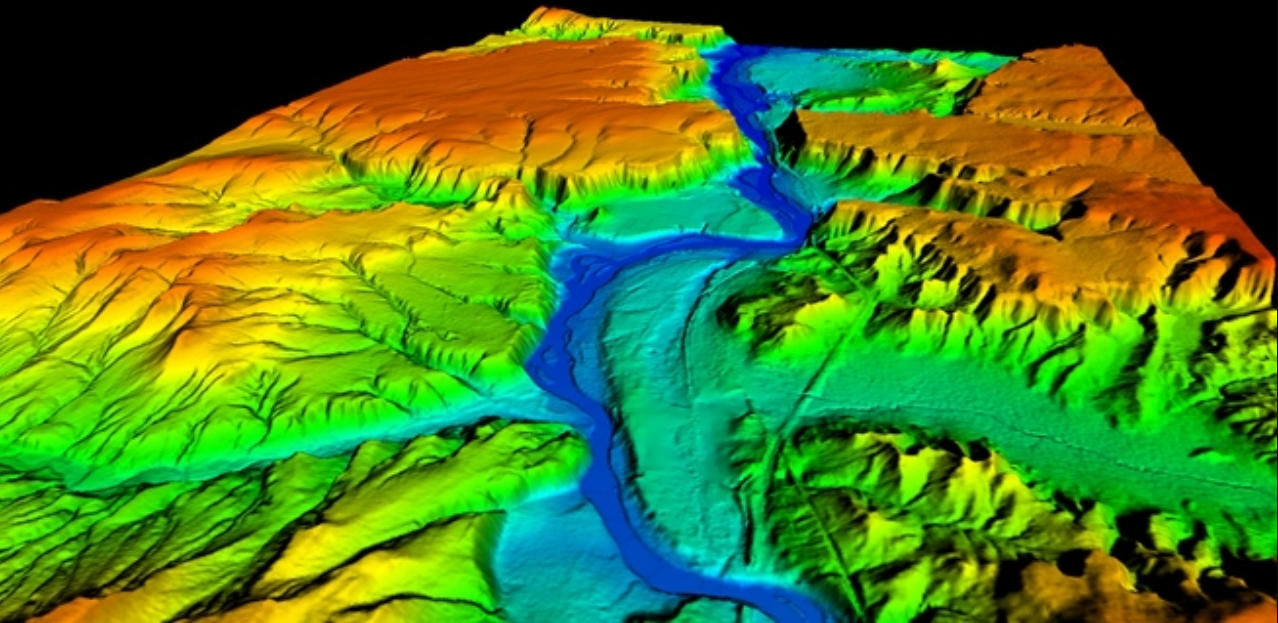
DTM (Digital Terrain Model)
DTM (Digital Terrain Model) is a type of geospatial data model that numerically represents the topography of the earth's surface. It records terrain relief, slopes, and topographic features in digital format, primarily focusing on ground elevation information, and is used for terrain analysis and geographic information processing. DTMs are typically expressed in formats such as grid-based raster data or TIN (Triangulated Irregular Network), and are characterized by representing "bare earth terrain" excluding features such as buildings and trees. They are often generated from survey data, airborne laser surveying (LiDAR), satellite remote sensing, and play an important role as foundational data in GIS and geographic analysis fields.
2026-03-07 14:41:07