
 Service

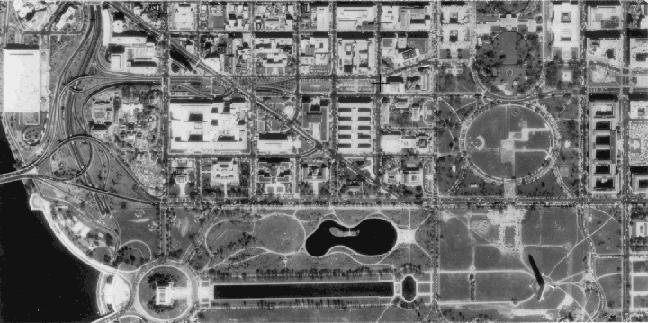
DOQ (Digital Orthophoto Quadrangle)
DOQ (Digital Orthophoto Quadrangle) is orthorectified aerial photograph data created in the United States. Primarily provided by the United States Geological Survey (USGS), it corrects distortions caused by terrain relief and camera tilt in aerial photographs, allowing it to be used as image data with the same coordinate accuracy as maps. DOQs are typically created for areas corresponding to quarter sections of 1:24,000 scale topographic maps (Quadrangles) and are characterized by their ability to accurately represent features such as roads, rivers, buildings, and vegetation based on actual geographic coordinates. Therefore, they are widely used as foundational data in diverse GIS applications including map creation, urban planning, and land use analysis.
2026-03-07 14:36:31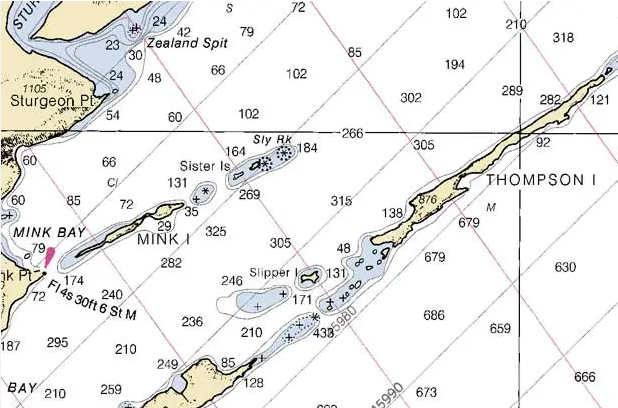
BSB (Nautical Chart Raster Format)
BSB (Nautical Chart Raster Format) is a raster data format primarily used for storing and distributing Raster Navigational Charts (RNC). Originally developed for chart distribution, it has now become one of the standard distribution formats for official raster navigational charts issued by hydrographic offices in various countries. The BSB format adds georeferencing information to scanned paper chart image data, enabling accurate position display on navigation support software. It is characterized by its design specifically tailored for maritime navigation applications.
2026-03-07 14:20:53
RLA (Run-Length Encoded Raster)
RLA (Run-Length Encoded Raster) is a format that efficiently stores raster data using Run-Length Encoding (RLE). By recording consecutive pixel sequences with the same value as "value + repetition count," it achieves high compression efficiency, particularly for classified raster data or data with many homogeneous areas. RLA has a relatively simple data structure and has been used as a lightweight raster data storage method in image processing and GIS fields. It is suitable for raster data with high value continuity, such as elevation models, land use classifications, and binary mask data.
2026-03-07 14:12:15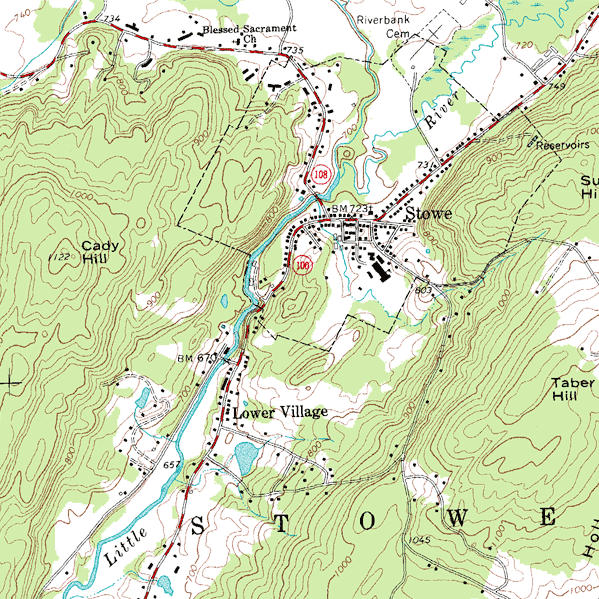
DRG (Digital Raster Graphic)
DRG (Digital Raster Graphic) is a raster data format created by scanning paper topographic maps at high resolution and adding georeferencing information. Primarily produced by the United States Geological Survey (USGS) through digitization of topographic maps, it preserves map information such as contour lines, roads, hydrography, and administrative boundaries as images. Since DRG contains geographic coordinate information, it can be overlaid with other geographic data in GIS and is widely used as base maps or reference maps.
2026-03-07 14:06:22
GXT
GXT / MapInfo Custom Coordinate System File is a text-based format used in MapInfo Professional to define custom map projections, coordinate systems, and datum transformations. Managed as part of MapInfo's spatial data management ecosystem, it enables users to extend beyond predefined coordinate systems by creating custom definitions tailored to specific local surveying needs, specialized datasets, or regional mapping requirements. It serves as an essential configuration tool for ensuring spatial data aligns correctly across different maps and layers.
2026-02-28 15:28:51
COLLADA / DAE (Digital Asset Exchange)
COLLADA / DAE is an open standard 3D data format designed for the exchange of 3D models and digital assets. Managed by the Khronos Group, it is XML-based and can describe 3D geometry, materials, textures, animations, scene structures, and more. It is widely used as a "neutral exchange format" enabling data interoperability between different software applications in game engines, 3D CG production tools, BIM, and the 3D GIS field.
2026-02-27 15:12:56_1772176271342.png)
OBJ (Wavefront 3D Model Format)
OBJ (Wavefront 3D Model Format, can include geographic coordinates) is a plain text 3D format developed by Wavefront Technologies. It stores geometric information (vertices, normals, UV coordinates) and polygonal face data, and supports referencing textures and lighting properties through external .mtl material files. Its openness and cross-platform compatibility make it a universal intermediate format in fields such as 3D modeling, game development, and 3D printing. However, it requires additional files to define georeferencing and does not support animation or complex scene data.
2026-02-27 15:07:23
PLY (Polygon File Format / Stanford Triangle Format)
LY (Polygon File Format / Stanford Triangle Format) is a file format for three-dimensional data primarily used in 3D scanning and computer graphics. Originally developed at Stanford University, it is characterized by its ability to flexibly describe not only shape information such as point clouds and polygon meshes but also attributes like color, normal vectors, and transparency. With a simple yet highly extensible structure, PLY is widely utilized across research and industrial applications, playing a key role in areas such as 3D modeling, visualization, reverse engineering, and digital preservation of cultural heritage.
2026-01-23 13:25:36
XYZ Format
The XYZ format is one of the most fundamental and widely used point data formats for describing three‑dimensional positional information using X, Y, Z coordinate values. It is typically stored as a text (ASCII) file, with each line representing a single point containing planar coordinates (X, Y) and a height or depth value (Z). Thanks to its simple structure, the XYZ format is utilized across a broad range of fields, including topographic surveying, point‑cloud processing, 3D modeling, GIS, CAD, and remote sensing.
2026-01-22 18:54:59
DEM (Digital Elevation Model Format)
DEM (Digital Elevation Model) is a universal terrain data format and concept that represents ground surface elevation in a grid-based (raster) numerical form. Each grid cell stores a corresponding elevation value, enabling quantitative analysis of terrain undulation and shape. As a vendor-neutral general-purpose format, DEM is widely used and regarded as a fundamental and essential spatial dataset across various fields, including terrain analysis, cartography, simulation, disaster prevention, and environmental analysis.
2026-01-22 18:48:32