
 Service


TER (Terragen Terrain File)
TER (Terragen Terrain File) is a proprietary terrain data file format used by the natural terrain generation software Terragen. Primarily designed for storing elevation information (heightmaps), it aims to represent realistic landforms such as mountains, hills, and valleys with high precision. While the TER format has been widely used in terrain modeling and the CG/VFX fields for its emphasis on visual realism, it is often treated as a supplementary or conversion format in the GIS domain.
2026-01-22 16:39:40
BAG (Bathymetric Attributed Grid)
BAG (Bathymetric Attributed Grid) is an open, standardized data format used for marine surveying and seabed terrain modeling, developed and maintained by the Open Navigation Surface Working Group. It employs an HDF5 container to organize data, with core components including the bathymetric grid elevation layer (storing seabed depth values) and the uncertainty layer (recording depth measurement errors), while also supporting embedded metadata (e.g., coordinate reference systems, acquisition device parameters) and optional layers (such as sounding point density and seabed classification). The format utilizes tile-based compression technology to optimize the storage and transmission efficiency of large-scale seabed terrain data and is compatible with multi-resolution pyramid structures. It is one of the marine bathymetric data exchange standards recommended by the International Hydrographic Organization (IHO).
2025-12-05 15:19:40
CIB (Controlled Image Base)
CIB (Controlled Image Base) file format is a format used in ArcGIS for storing and managing raster data, typically employed alongside geodatabases as part of raster datasets, mosaic datasets, or raster catalogs. It defines the storage method for pixels, such as the number of rows, columns, and bands, serving as a native format for internal data exchange and management within the ArcGIS ecosystem. For more general image processing, common formats such as JPEG, PNG, and BMP may be more suitable.
2025-12-05 15:14:00
CADRG (Compressed ARC Digitized Raster Graphics)
CADRG (Compressed ARC Digitized Raster Graphics) is an abbreviation for "Compressed ARC Digitized Raster Graphics," primarily used for storing and transmitting raster images in geospatial data. It is commonly employed in military and surveying fields. This format optimizes data storage efficiency through compression technology and supports high-precision digital representation of geographic information, typically requiring professional software for import and processing. In GIS applications, CADRG format often needs to be converted to a file geodatabase raster to improve subsequent analysis efficiency.
2025-12-05 15:08:03
RPF (Raster Product Format)
RPF (Raster Product Format, U.S. Department of Defense standard) is a standardized data structure established in 1994, serving as the U.S. military's standard for geospatial databases composed of rectangular arrays of pixel values (e.g., digitized maps or images) in compressed or uncompressed forms. Its intended purpose is to manage the design of a series of digital data exchange products, including digital maps, imagery, and other geospatial data for military applications. Designed to be a versatile and adaptable format for raster products, whether compressed or uncompressed, RPF aims to enable applications to directly use data stored in computer-readable RPF formats on exchange media (e.g., CD-ROMs) without requiring further conversion or manipulation. The format is characterized by a hierarchical directory structure, including a catalog file (sometimes referred to as an A.TOC file) and one or more frame directories representing raster data frames.
2025-12-05 15:01:04
ADF (ArcInfo Binary Grid Format)
ADF (ArcInfo Binary Grid Format) is a proprietary raster data format developed by Esri. It is used for storing and managing raster data, which can contain various types of geospatial information such as elevation data, land cover types, vegetation indices, etc. The ADF format can store raster layers with different resolutions and data types, making it significant in GIS applications.
2025-12-03 17:19:59
GeoJSONB (Binary GeoJSON)
GeoJSONB is a binary format used in PostgreSQL databases for storing GeoJSON data. It enables the database to handle geospatial data in a more compact and efficient manner. This format is supported by the PostGIS extension for PostgreSQL, which is a specialized geospatial database extension designed to enhance PostgreSQL's capabilities in managing location-based information.
2025-11-24 15:07:35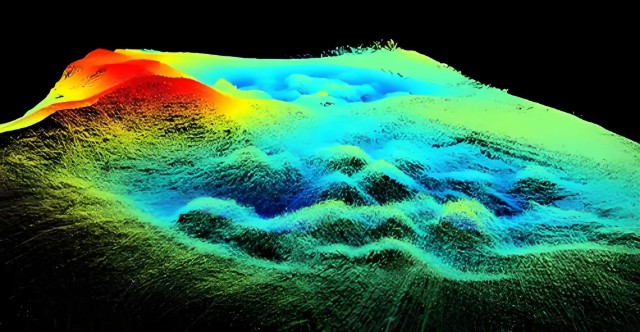
LAS/LAZ (LiDAR Point Cloud Format)
LAS/LAZ (LiDAR Point Cloud Format) files are standard formats for storing 3D point cloud data acquired through LiDAR technology, established by the American Society for Photogrammetry and Remote Sensing (ASPRS). The LAS format uses a binary structure to store attributes such as 3D coordinates (X, Y, Z), intensity, return number, and classification for each point. LAZ is a compressed version of LAS that significantly reduces file size while maintaining data integrity.
2025-11-24 14:57:18
3D Tiles (Cesium Standard)
3D Tiles (Cesium Standard), as an open standard, defines methods for streaming transmission and visualization of large-scale 3D geospatial data on the web. Proposed and open-sourced by the Cesium team, it has now become an OGC (Open Geospatial Consortium) Candidate Standard and is widely used in digital cities, smart campuses, geological exploration, and other fields. Its core design employs a Hierarchical Level of Detail (HLOD) structure, which uses spatial partitioning algorithms to divide 3D models into multi-resolution tiles. This supports dynamic data loading based on the view frustum range, effectively addressing issues in traditional 3D models such as excessive memory usage and rendering lag in browsers.
2025-11-24 14:49:58
DGN (MicroStation Native Format)
DGN (MicroStation Native Format) is a CAD file format developed based on Microsoft's OLE2 file structure, primarily used in 3D, BIM, and GIS industries. Developed by Bentley Systems, this CAD format is designed for recording and exchanging design data, offering a comprehensive data model and multi-layer drafting capabilities while supporting operation across multiple platforms.
2025-11-24 14:39:21