
 Service


OpenDRIVE (.xodr)
OpenDRIVE (.xodr) is an open standard file format used to describe static road networks in autonomous driving simulation. Based on the XML structure, it can precisely represent critical information such as road geometry, lane layout, and traffic signs. Maintained by the ASAM organization, it is primarily used in high‑definition maps and driving simulators, supporting data exchange between different simulation platforms and ensuring high realism and interoperability when testing and validating autonomous driving systems in virtual environments.
2026-05-25 13:46:15
SDTS (Spatial Data Transfer Standard)
SDTS (Spatial Data Transfer Standard) is a spatial data exchange standard developed in the United States, designed to enable lossless conversion of geographically referenced data between different computer systems. By defining a unified three‑layer model (conceptual, logical, and format), it ensures the integrity of vector and raster data during transmission and supports the simultaneous exchange of metadata. The standard was confirmed as a U.S. Federal Information Processing Standard (FIPS 173) in July 1992. Led by the U.S. Geological Survey (USGS), SDTS has been widely used for spatial data sharing among federal agencies, local governments, and commercial organizations.
2026-05-25 13:41:51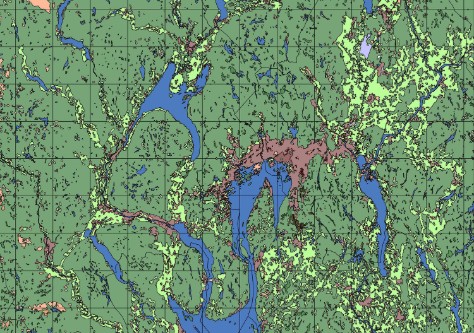
SOSI (Systematic Organization of Spatial Information)
SOSI (Systematic Organization of Spatial Information) is Norway‘s national geographic information exchange standard. It is widely used for geospatial data sharing and exchange among Norwegian government agencies and industries. SOSI supports the structured storage of various types of spatial information, including terrain, roads, water systems, and more. It serves as an important foundational format in Norway’s GIS domain and is still in use by official mapping authorities, although there are plans to transition to international standards such as GML in the future.
2026-05-25 13:36:42
SpatiaLite (.sqlite)
SpatiaLite (.sqlite) is an extension module for the SQLite database that adds support for geospatial data to SQLite. It enables the storage, querying, and analysis of geometric objects such as points, lines, and polygons, and provides full spatial indexing and spatial functions (e.g., distance calculation, intersection testing, buffer analysis). Thus, it implements lightweight, serverless spatial database functionality within a single .sqlite file, making it suitable for geographic information processing needs in mobile applications, desktop tools, and embedded systems.
2026-05-25 13:29:10
WKB (Well-Known Binary)
WKB (Well-Known Binary) is a binary encoding standard defined by the Open Geospatial Consortium (OGC) for representing geometric objects. It stores spatial features such as points, lines, and polygons as a compact byte stream. Compared to the text‑based WKT format, WKB offers higher storage efficiency and faster transmission and parsing speeds. Its structure typically consists of a 1‑byte byte order marker (0x01 for little‑endian), a 4‑byte geometry type code (e.g., Point = 1, LineString = 2), followed by coordinate data. Coordinates are arranged as IEEE 754 double‑precision floating‑point numbers. WKB is widely used as the underlying storage format for geometry fields in spatial databases such as PostGIS and MySQL.
2026-05-25 13:24:10
WKT (Well-Known Text)
WKT (Well-Known Text) is a standardized text format used to represent geometric objects—such as points, lines, and polygons—in a human‑readable string form. It is widely applied in geographic information systems (GIS) and spatial databases. For example, POINT(30 10) represents a point with coordinates (30, 10); LINESTRING(0 0, 1 1, 2 1) represents a polyline; and POLYGON((0 0, 10 0, 10 10, 0 10, 0 0)) represents a rectangular polygon. Its syntax is defined by the Open Geospatial Consortium (OGC), facilitating the exchange of spatial data between different systems.
2026-05-25 13:11:33
Ordnance Survey OS Data Hub API
Ordnance Survey OS Data Hub API is a cloud-based geospatial data delivery service provided by Ordnance Survey (OS), the national mapping agency of Great Britain. It offers OS's high-precision geographic data (mapping, addresses, road networks, administrative areas, topography, etc.) as a RESTful API that can be directly integrated into web and mobile applications for real-time use. In an authenticated environment, developers can access various GIS datasets and efficiently incorporate functions such as map display, spatial analysis, route calculation, and statistical aggregation.
2026-05-15 17:27:49
GeoNames Web Services
GeoNames Web Services is a suite of RESTful web services that provide programmatic access to the GeoNames geographical database, one of the world's largest free geographic name repositories. Launched in 2006 by Marc Wick, the GeoNames project contains over 11 million unique geographical features and 5.5 million alternate names across approximately 200 languages . The web services offer functionality including full-text search, reverse geocoding (converting coordinates to place names), postal code lookup, and Wikipedia article integration. All data is available under a Creative Commons Attribution license, making it accessible for both free and commercial applications. The services are widely used in mapping applications, logistics tracking, travel planning, and GIS analysis.
2026-05-14 19:53:56
NOAA NCEI API (National Centers for Environmental Information API)
The NOAA NCEI API (National Centers for Environmental Information API) is a climate, ocean, and geographic data access service provided by the U.S. National Oceanic and Atmospheric Administration (NOAA). It offers a unified interface for obtaining and analyzing a wide variety of geospatial and environmental data, including temperature, precipitation, sea surface temperature, meteorological observations, and climate change indicators. Through the API, researchers, data scientists, and policymakers can efficiently retrieve both real‑time and historical data for use in diverse fields such as climate modeling, environmental assessment, and disaster prediction.
2026-05-14 19:44:55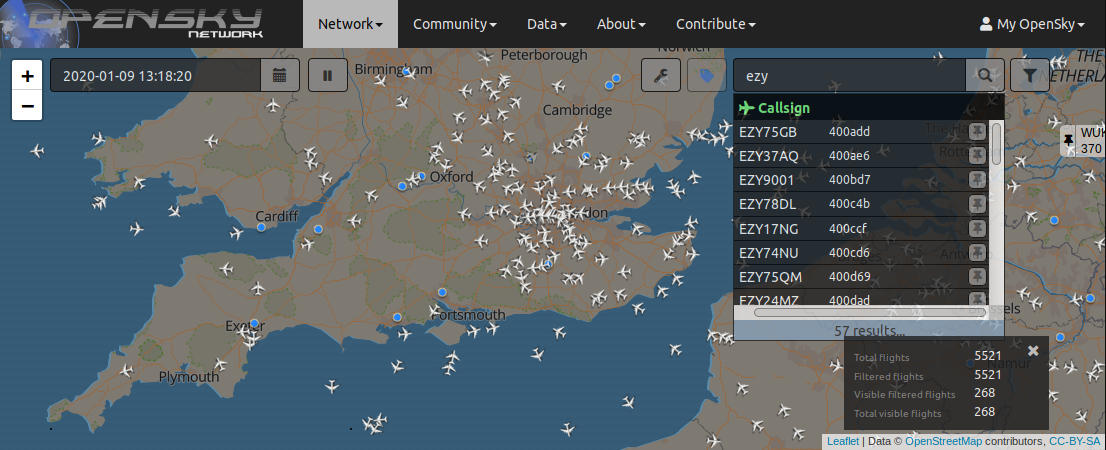
OpenSky Network API
The OpenSky Network API is an open API platform that collects and provides real-time flight data for commercial aircraft and drones. It offers information such as aircraft positions, altitude, speed, flight paths, and identification numbers, and can be used for air traffic monitoring, flight analysis, and research purposes. Data is collected through sensors and the ADS-B (Automatic Dependent Surveillance–Broadcast) network, and developers and researchers can easily access it via a RESTful API. This enables a wide range of applications, including visualization of air traffic conditions, flight pattern analysis, airspace management, and safety monitoring.
2026-05-14 19:36:02