
 Service


Globe Projection
Globe Projection is a display and projection technology that maps the Earth's surface or spherical information directly onto a three-dimensional globe model. Unlike traditional flat map projections, it uses a spherical screen or virtual globe to present panoramic, 360-degree imagery, providing better spatial continuity and immersion in all directions. This technology typically relies on multiple projectors working with edge blending and spherical correction algorithms to seamlessly stitch images onto spherical or dome-shaped screens. It is widely used in planetariums, science museums, exhibitions, and immersive educational environments, allowing audiences to feel as if they are inside the real Earth or outer space.
2026-07-29 10:50:43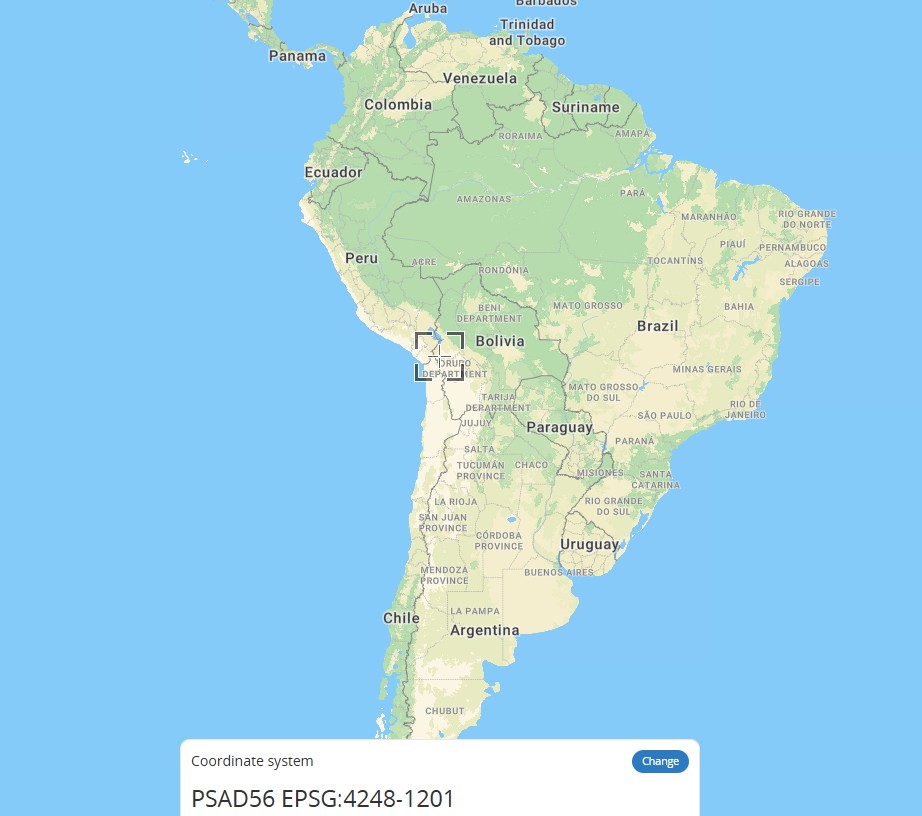
PSAD56 (EPSG:4248)
PSAD56 (EPSG:4248) is the Provisional South American Datum of 1956, a traditional map coordinate system widely used in South America. Established based on local ground survey data, it was primarily employed for early surveying, cartography, and geographic data collection across South American countries. It utilizes specific ellipsoid parameters and continues to be used in many historical geographic datasets, legacy maps, and routine regional surveys.
2026-07-29 10:39:46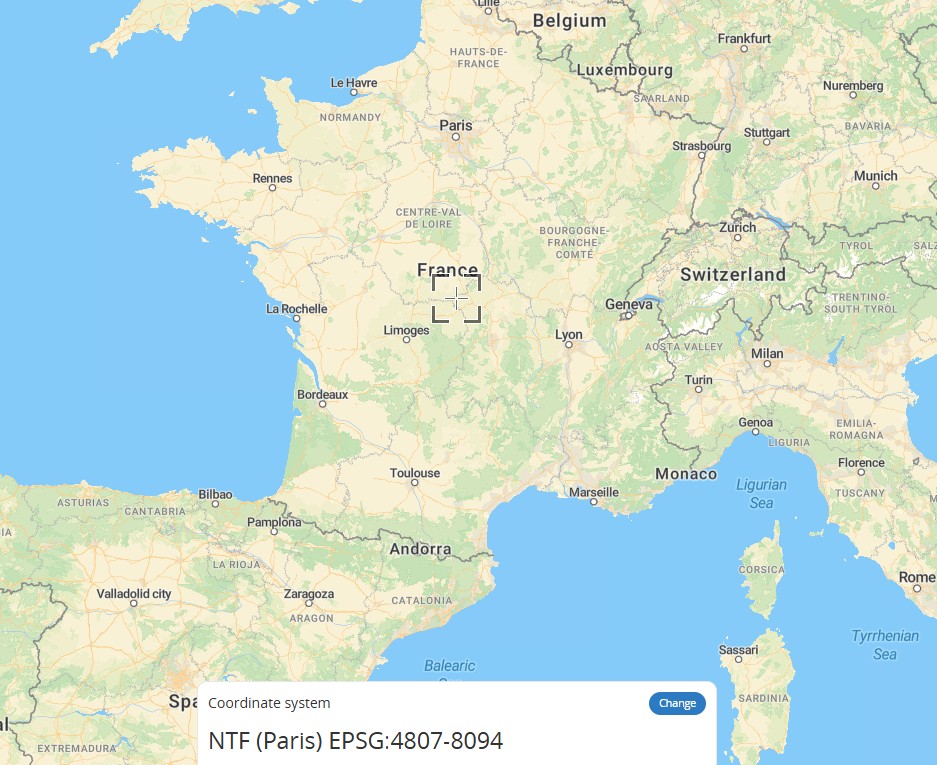
NTF (Paris, Nouvelle Triangulation Française–EPSG:4807)
NTF (Paris), corresponding to EPSG:4807, is the classical French geodetic coordinate system known as the Nouvelle Triangulation de la France. It covers metropolitan France and Corsica and was primarily designed to support national cartographic work across France. It uses the Clarke 1880 (IGN) ellipsoid, the Paris meridian as its prime meridian, and grads as its angular unit. Its fundamental origin is the cross mark at the Pantheon in Paris. For planar mapping, it is commonly associated with Lambert zone projections. Today, it has largely been replaced by the RGF93 coordinate system. Relative to WGS84, its approximate origin offsets are Tx = -168 m, Ty = -60 m, Tz = +320 m, making it a common reference system when working with older French surveying and mapping data in GIS.
2026-07-16 14:39:44
Teleport API
Teleport API is a cloud-based interface service built on 3D Gaussian Splatting technology for spatial data processing scenarios. It supports uploading image and video capture data to automatically generate real-world 3D reconstruction models. These 3D assets, ranging from lightweight models to highly photorealistic reconstructions, can be seamlessly integrated into a developer’s own workflows, visualization platforms, or VR/AR applications. With the help of elastic GPU clusters, Teleport API also supports automated batch processing and can handle spatial datasets ranging from a single scene to city-block-scale environments.
2026-07-16 14:32:54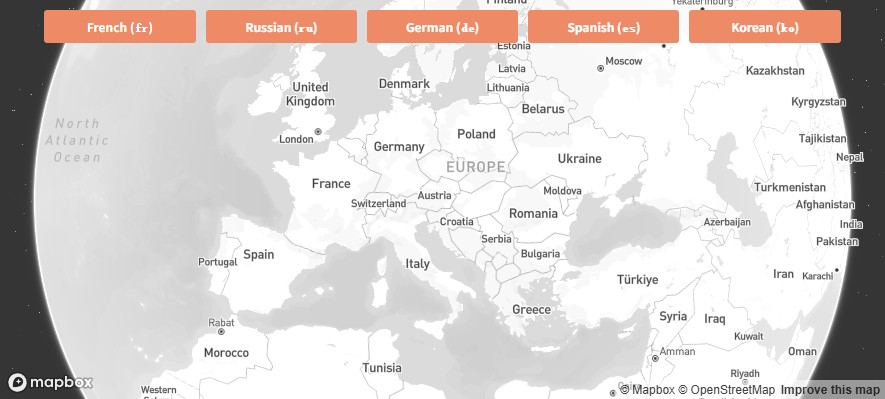
Mapbox Language API
Mapbox Language API refers to the set of services and tools in the Mapbox ecosystem used to support multilingual map experiences. Built on top of Mapbox’s core mapping capabilities, it allows developers to quickly switch place names, map labels, and interface text into different languages to meet the needs of users in different regions. A common implementation is the open-source Mapbox GL Language plugin, which provides convenient multilingual switching for web maps based on Mapbox GL JS. It helps international-facing map applications deliver localized map labeling more efficiently.
2026-07-16 14:25:46
OpenWeatherMap API
OpenWeatherMap API is an open weather data service that provides global real-time weather, minute-level precipitation forecasts, 48-hour hourly forecasts, 8-day daily forecasts, national-scale weather alerts, and more than 40 years of historical weather data. Developers can access it with an API key and retrieve responses in JSON or XML format, then integrate it into websites, mobile applications, or IoT devices. This makes it suitable for location-based dynamic weather display and intelligent decision support. It is especially widely used in map platforms for visualizing weather layers and delivering real-time alerts to end users.
2026-07-10 17:20:25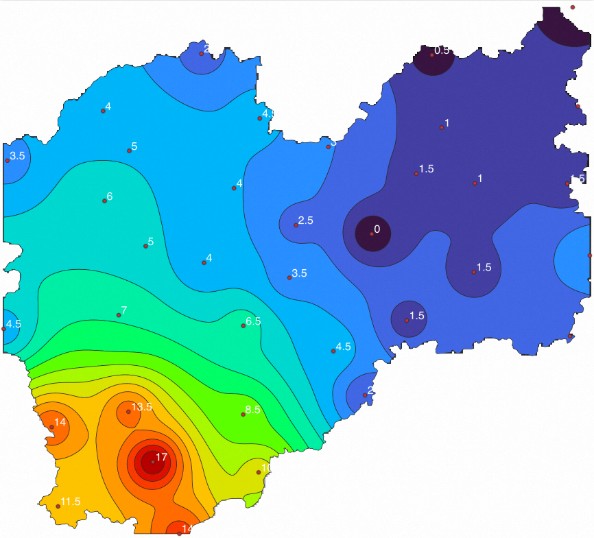
Zarr
Zarr is a chunked, compressed N-dimensional array storage format designed for cloud-native workflows and high-performance computing. It splits large multidimensional scientific datasets, such as meteorological, remote sensing, and genomic data, into small independent chunks that are stored separately. Zarr supports multiple compression algorithms, including zstd and Blosc, and can be stored directly on local file systems, in ZIP archives, or in cloud object storage such as AWS S3. It natively supports parallel read/write access and lazy loading. Compared with NetCDF and HDF5, Zarr is better suited to large-scale data collaboration and distributed processing in cloud environments, and it has become one of the main backend formats for scientific computing tools such as xarray and Dask.
2026-07-10 17:06:26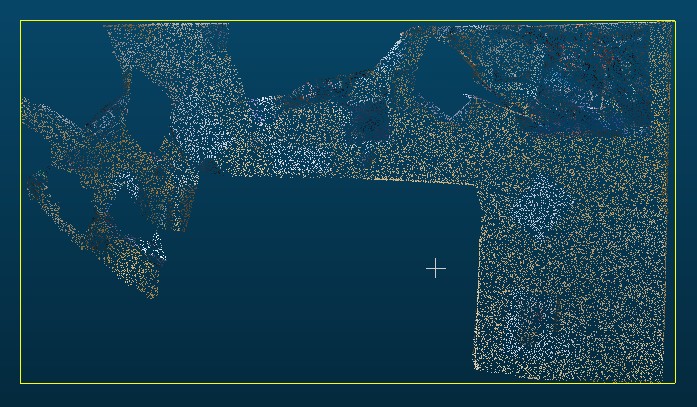
EPT (Entwine Point Tile)
EPT (Entwine Point Tile) is a hierarchical spatial indexing format for large point cloud datasets, developed as part of the Entwine ecosystem. It organizes point cloud data into a tiled, octree-based structure so that clients can stream, query, and visualize only the portions they need. EPT is widely used for web-based point cloud delivery and visualization, especially for LiDAR and other large 3D geospatial datasets. Its main advantage is efficient access to massive point clouds without requiring the entire dataset to be loaded at once.
2026-07-10 16:16:34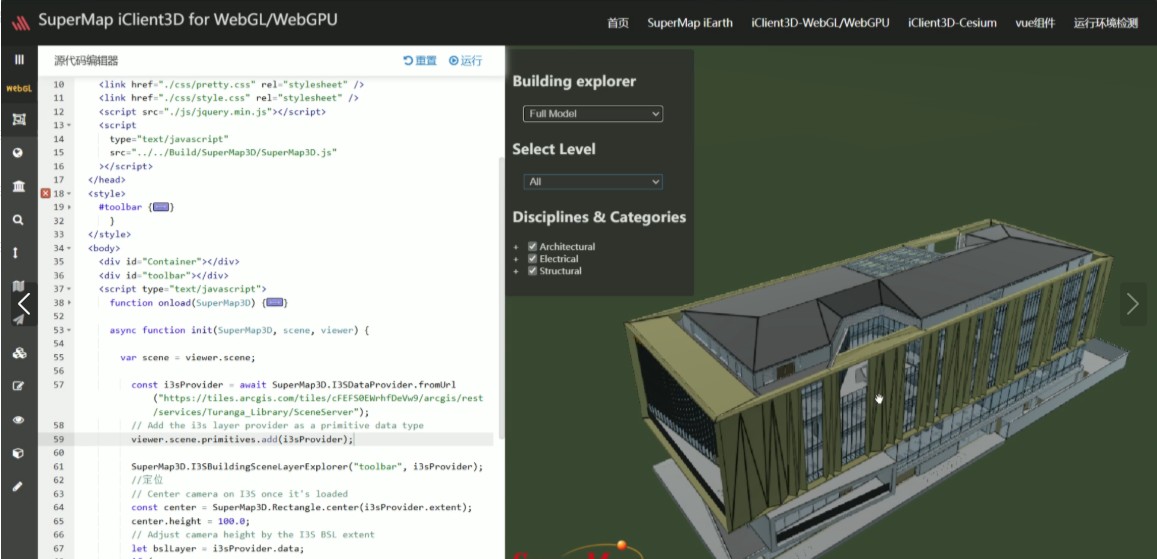
I3S / Scene Layer Package
I3S, which stands for Indexed 3D Scene Layer, is an open 3D geospatial data standard led by Esri and adopted by the OGC (Open Geospatial Consortium). Its accompanying format, the Scene Layer Package (SLPK), packages all scene layer resources into a single archive file. Built on modern web technologies such as JSON and REST, it is adapted to cloud, web, and mobile environments, supporting efficient streaming, storage, and visualization of large-scale heterogeneous 3D data. It is compatible with multiple types of 3D content including 3D objects, oblique photogrammetry, point clouds, and BIM. It is now widely supported by major GIS software such as ArcGIS and ContextCapture.
2026-06-24 17:03:50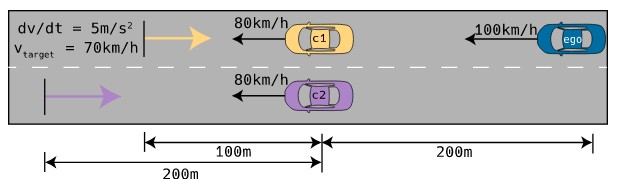
OpenSCENARIO (.xosc)
OpenSCENARIO (.xosc) is a standardized XML format maintained by the ASAM (Association for Standardization of Automation and Measuring Systems) organization, specifically designed for describing dynamic scenarios in traffic simulation. It focuses on the behavioral interactions of traffic participants such as vehicles and pedestrians, and can reference static road network files such as OpenDRIVE. Through a hierarchical storyboard structure, it defines event trigger conditions and action sequences, serving as the core universal standard for achieving scenario reusability and cross-tool interoperability in the field of autonomous driving virtual testing.
2026-06-24 16:59:34