
 Service

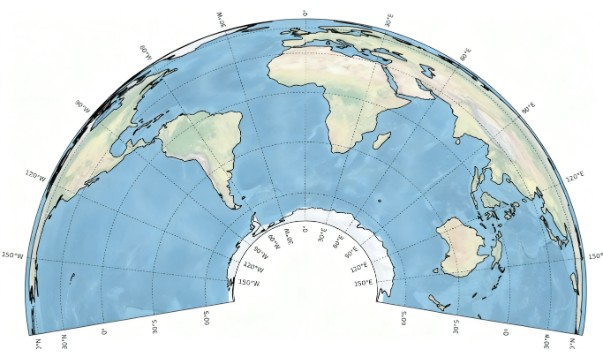
Albers Equal-area Conic Projection
Albers equal-area conic projection is an equal-area conic projection that utilizes two standard parallels. Compared to projections with only one standard parallel, this approach helps reduce distortion to some extent. It is best suited for mapping large continental areas extending predominantly in an east-west direction in the mid-latitudes and is commonly used for maps of the contiguous United States, Europe, and Australia.
2025-11-24 16:12:02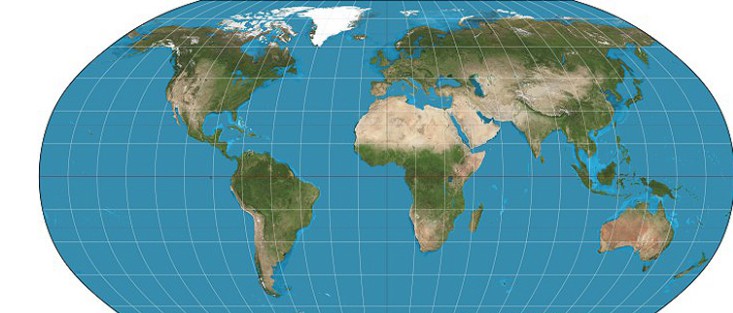
Robinson Projection
Robinson projection is a widely used map projection method developed since the 1960s, designed to represent the entire world on a single map. It seeks a practical compromise for displaying the whole Earth on a flat surface. Introduced in 1963 by Dr. Arthur H. Robinson, this projection features straight latitude lines and evenly spaced meridians, classifying it as a pseudocylindrical projection. While the central meridian is straight, all other meridians are curved. Robinson defined this projection by constructing a lookup table of Cartesian coordinates through specific interpolation of latitudes and longitudes, rather than using mathematical formulas.
2025-11-24 16:09:04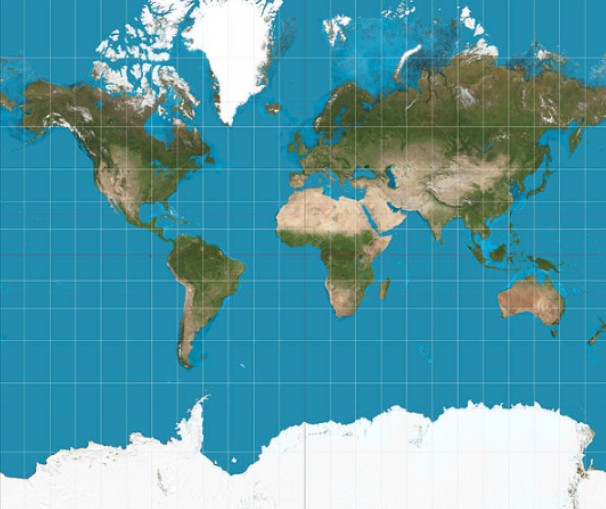
Mercator Projection
Mercator projection is a conformal tangent cylindrical projection devised by the Flemish cartographer Gerardus Mercator in 1569. It conceptually projects the Earth's surface onto a cylinder tangent at the equator, with a light source at the Earth's center casting surface features onto the cylinder. When unrolled, this creates a world map with the standard parallel at zero degrees (the equator).
2025-11-24 16:01:13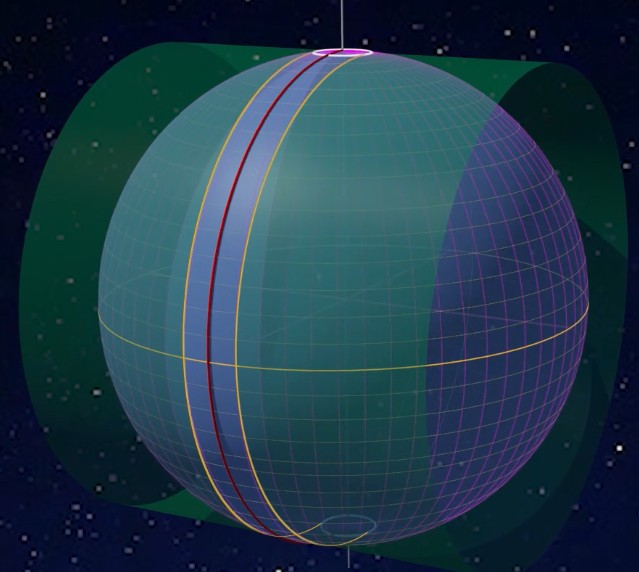
UTM Zone (Universal Transverse Mercator Coordinate System)
UTM Zone (Universal Transverse Mercator Coordinate System) is a coordinate system that converts latitude and longitude coordinates on the Earth's surface into a planar Cartesian coordinate system. It is widely used in map creation, engineering surveying, and military applications. Its core principle involves reducing distortion through zonal projection and achieving high-precision positioning through standardized coordinate representation.
2025-11-24 15:52:38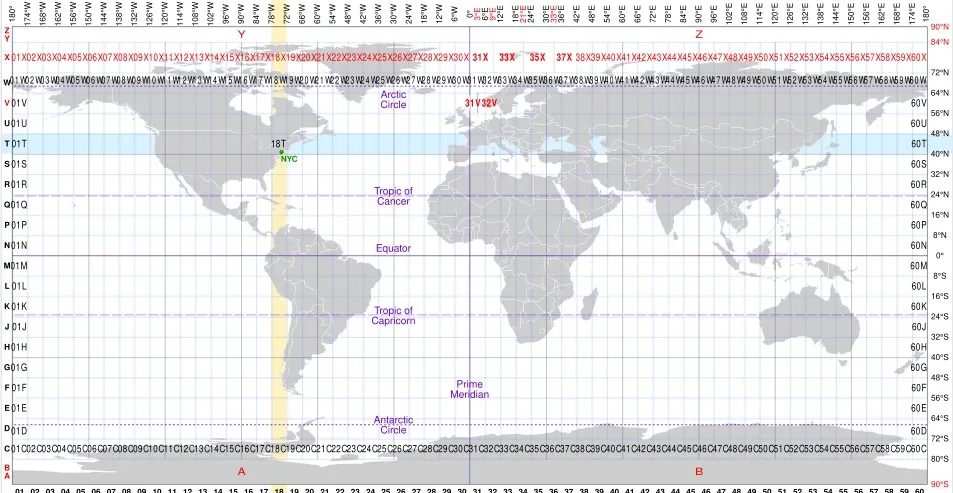
MGRS
MGRS coordinate system, also known as the Military Grid Reference System, is a standard coordinate system used by NATO military organizations. It is based on the Universal Transverse Mercator (UTM) system and further divides each UTM area into small squares of 100km x 100km. These blocks are identified by two connected letters, with the first letter representing the east-west position of the longitude zone and the second letter representing the north-south position.
2025-11-05 15:16:23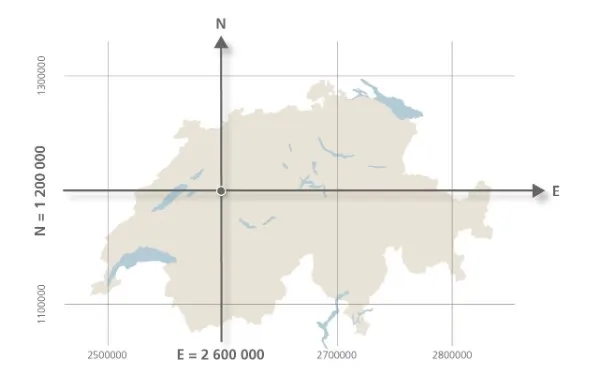
Swiss LV95
Swiss LV95 is a projection coordinate system adopted by the Swiss government, based on the CH1903+/LV95 standard, and is a variant of the Gauss Kruger projection designed specifically for planar surveying in the Swiss region. It solves the problem of direct use of spherical data in engineering and mapping by converting geographic coordinates (such as WGS84) into planar coordinates. This coordinate system is widely used in navigation, land management, and infrastructure planning in Switzerland, and its coordinate values are usually expressed in meters.
2025-11-05 15:14:49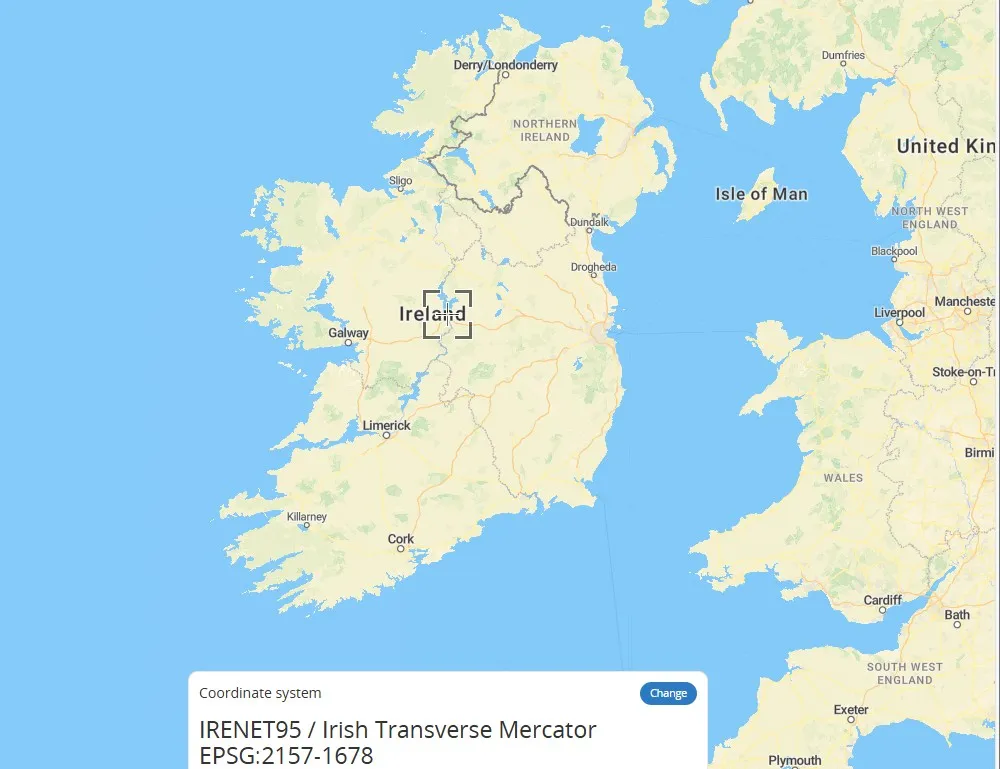
Irish Transverse Mercator
Irish Transverse Mercator (ITM) is a transverse Mercator projection coordinate system designed specifically for Ireland, using the ETRS89 ellipsoid as the reference. The central meridian of its projection is 8 degrees west longitude, and the geographic coordinates of the Irish region are converted into plane coordinates through the horizontal axis isometric cylindrical projection method to reduce deformation and meet national surveying and mapping needs. This coordinate system is the primary projection system for official maps and geospatial data of Ireland.
2025-11-05 15:13:00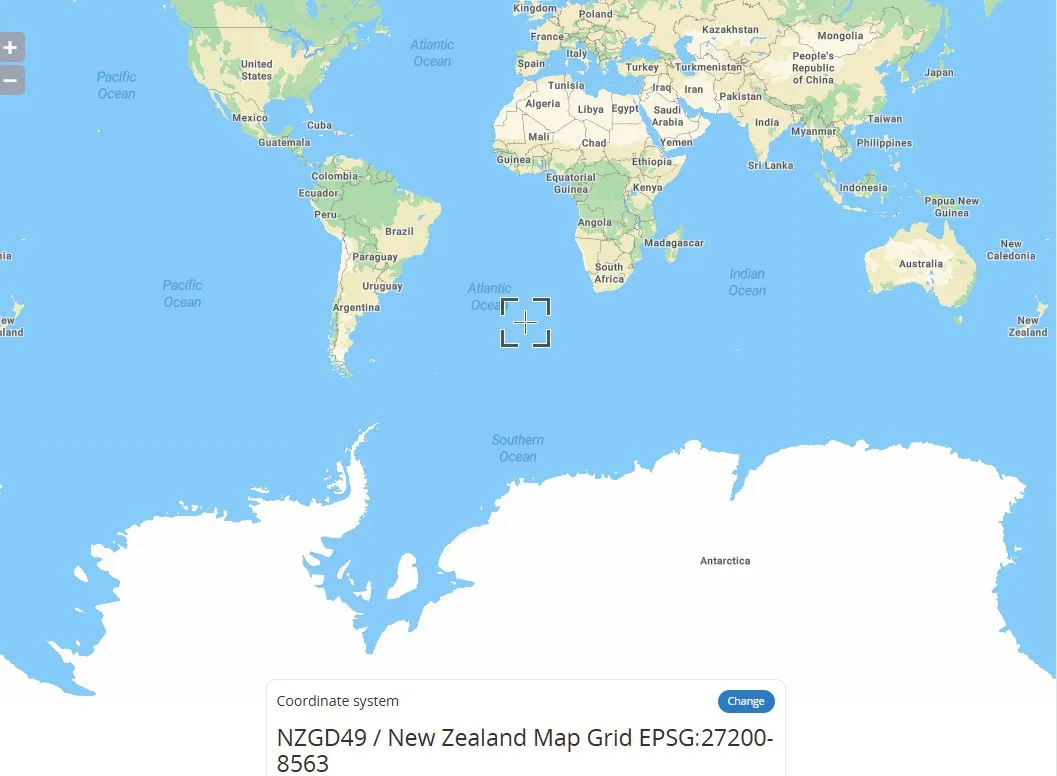
NZMG (New Zealand Map Grid – EPSG:27200)
New Zealand Map Grid (NZMG) coordinate system is a projected coordinate system used in New Zealand. Based on the Transverse Mercator projection, it is primarily used for mapping and georeferencing within New Zealand. It projects the Earth's surface onto a flat surface, centered on the South and North Islands of New Zealand. It uses specific central meridians and scale parameters to minimize projection distortion. This coordinate system is widely used in surveying, engineering, and land management in New Zealand. Coordinates are typically expressed in meters, with an origin near the South Island.
2025-11-05 15:11:00
Belgian Lambert 72 (EPSG:31370)
Belgian Lambert 72 is a regional geodetic coordinate system based on the Lambert Conformal Conic Projection used in Belgium. It is based on the Belgian geodetic datum established in 1972. This projection transforms the Earth's spheroid onto a flat surface and is suitable for mapping and geographic information system (GIS) applications in Belgium and the surrounding area. Its EPSG code is 31370. Unlike geocentric systems (e.g., WGS-84), this system is classified as a "local datum" because the center of the ellipsoid does not coincide with the Earth's center of mass.
2025-11-05 15:09:48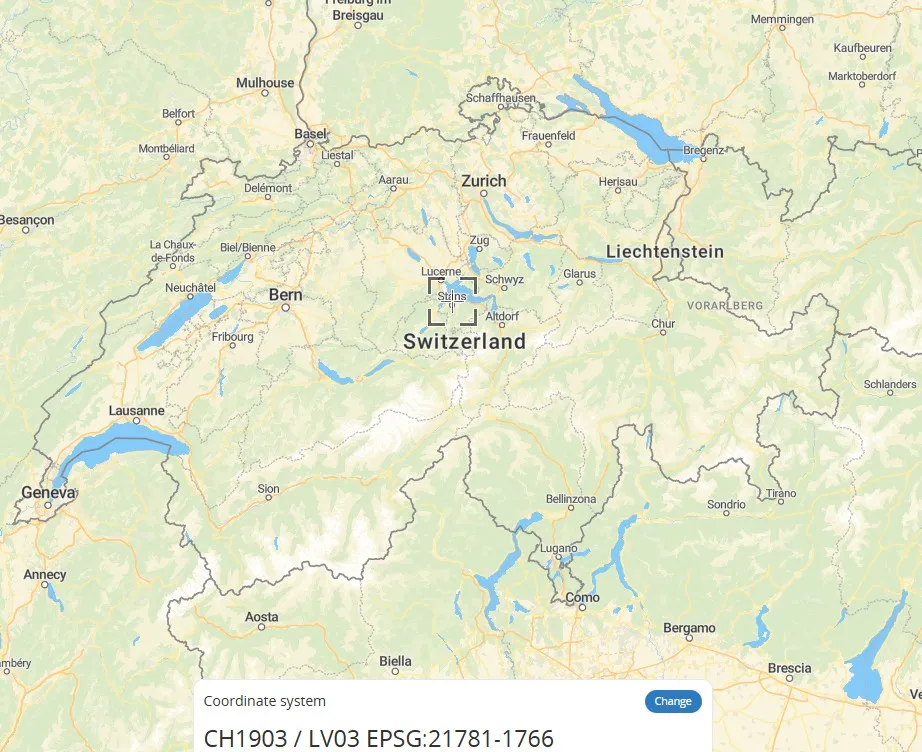
CH1903 / LV03 (Old Swiss National Coordinate System – EPSG:21781)
CH1903/LV03 is the national Cartesian coordinate system used by Switzerland. It uses the former Bern Observatory as its reference point (mandatory definition: 600,000 meters east longitude, 200,000 meters north latitude) and uses metric units to simplify positioning calculations. This coordinate system is based on the CH1903 geodetic datum. Its improved version, CH1903+, relocates the reference point to the Zimmerwald Observatory, but the coordinate error between the two is kept within 3 meters, making it suitable for mapping services throughout Switzerland. Unlike globally accepted geographic coordinate systems such as WGS84, CH1903 is a projected coordinate system that uses Cartesian (X, Y) coordinates to enable precise measurement of local areas.
2025-11-05 15:08:15